
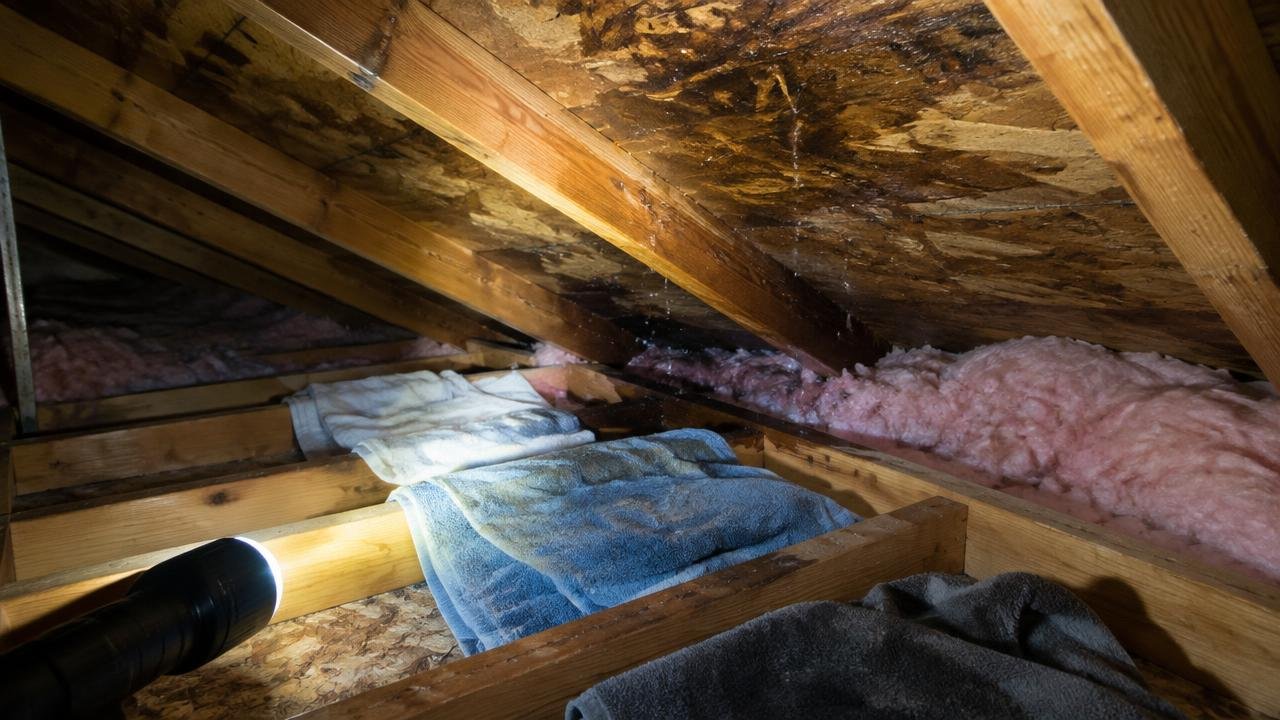
When water appears on a ceiling or runs down a wall, it is natural to want to find the roof opening immediately. Resist the urge to climb onto the roof: rain, wind, darkness, and wet surfaces make falls and electrical hazards especially dangerous. The first priorities are protecting people, containing water where safe, and contacting qualified help. Even a small stain deserves attention because moisture may travel through framing before showing indoors.
A temporary response can reduce damage, but it is not a substitute for identifying and repairing the source. Keep a record of when the leak occurs and what areas are affected. If you are still investigating the cause, review common reasons a roof leaks and request professional leak detection.
1. Protect people and avoid immediate hazards
Keep family members and pets away from wet ceilings, sagging drywall, and areas where water is near electrical outlets, lights, wiring, or appliances. Never touch a wet fixture or stand in water while interacting with electrical equipment. If there is an immediate electrical concern, keep clear and contact emergency services or a qualified electrician as appropriate. A ceiling that bulges may be holding a significant amount of water; do not puncture it or stand underneath it. A sudden collapse can cause serious injury.
Look for other hazards from a safe position: broken glass, fallen branches, exposed nails, or unstable structural materials. Do not enter an attic if access requires walking on ceiling joists without proper footing or if wiring and wet insulation create risk. Do not climb a ladder in wind or rain. A roofing professional can inspect the exterior when conditions are safe. If the roof appears structurally compromised, keep occupants away from that part of the building until it is assessed.
- Keep people clear of sagging or saturated ceilings.
- Avoid wet electrical areas and do not handle fixtures or wiring.
- Do not access a roof during unsafe weather or without proper training and equipment.
2. Limit interior water damage safely
If there is a steady drip and the floor is safe, place a bucket or other stable container below it. Move furniture, electronics, artwork, and other belongings out of the path. Use towels or plastic sheeting to protect nearby surfaces, taking care not to create a slipping hazard. If water is spreading over a large area, a qualified water-mitigation provider may be able to extract water and dry affected materials. Keep children and pets away from equipment and wet floors.
Do not assume that a small visible area means the damage is minor. Water can spread inside insulation, ceiling cavities, and wall assemblies. Photograph the condition before moving items when practical, then continue documenting changes. Avoid using household fans or electrical devices in a wet area unless a qualified person confirms it is safe. The goal is to protect the home without creating a second emergency.
3. Record the leak and contact the right professionals
Write down the date and time, weather conditions, the room and location of the water, and whether the leak changes as rain intensity changes. Take clear photographs or video from a safe location. Note whether the water is near a bathroom, plumbing line, chimney, skylight, or exterior wall. This timeline can help distinguish roof entry from plumbing or condensation, although only a proper investigation can establish the cause. Save receipts for emergency materials and professional services.
Contact a roofing contractor to assess a suspected roof leak and ask how soon an inspection can be scheduled. If evidence suggests a burst pipe, fixture, or HVAC issue, contact the relevant trade professional as well. A contractor should explain the likely source, limits of the inspection, recommended temporary measures, and proposed permanent work. Central Indy Roofing offers roof inspections and roof repair for residential and commercial properties.
4. Use temporary protection only when appropriate
Temporary coverings can help limit additional water entry, but installing a tarp on a roof is hazardous and can damage roofing if done incorrectly. Do not attempt it in active rain, high wind, darkness, or icy conditions. Ask a qualified professional whether a temporary measure is appropriate and how it will be secured. Keep records of the work, materials, and date. An interior bucket catches water but does not stop water from traveling through the roof assembly.
If a temporary repair is needed, make sure you understand what it does and does not address. A short-term patch may not correct wet insulation, damaged decking, failed flashing, or a second entry point. Ask whether a follow-up inspection is required after the weather clears. For a suspected issue around a wall, chimney, or roof opening, a specialist may recommend flashing repair or another targeted solution rather than a generic sealant application.
5. Notify your insurer when storm damage may be involved
If a recent wind, hail, or falling-tree event may have caused the leak, review your policy and contact the insurer promptly according to its reporting instructions. Policies vary in deadlines, deductibles, covered causes, and duties to mitigate further damage. Describe what you know accurately and avoid speculating about hidden damage. Keep your claim number, correspondence, photographs, inspection notes, and emergency invoices together. An inspection or estimate is not a promise that the insurer will cover the work.
Ask the insurer whether it wants to inspect before permanent repairs, while still addressing urgent steps needed to protect the property. Keep removed materials or photographs when appropriate and safe, and make sure any temporary work is documented. If an adjuster and contractor describe different scopes, request itemized explanations and provide factual supporting information. For broader context, read how to file a roof insurance claim and what to do after a storm.
6. Confirm the source and choose a durable repair
Before approving work, ask the contractor to identify the evidence supporting the diagnosis. The entry point could be a damaged shingle, failed flashing, a roof penetration, a drainage issue, or something unrelated to the roof. Request photographs and a written scope describing materials, labor, and any exclusions. Ask whether the repair is expected to resolve the leak, whether hidden damage may change the scope, and how change orders will be handled. A clear explanation helps you compare options without relying on unsupported guarantees.
After work, keep the contract, invoice, material details, and completion photographs. Monitor the area during later rain, but do not climb onto the roof to inspect it. If dampness returns, record the conditions and contact the contractor promptly. A recurring leak may point to a missed source or a separate issue. For an assessment and next steps, request a free roof inspection from Central Indy Roofing or call 317-836-2455.
Frequently Asked Questions
- Should I poke a hole in a bulging ceiling?
- Do not do so unless a qualified professional has assessed the situation and instructed you. A bulge can indicate trapped water, but puncturing it risks sudden release, falling material, and nearby electrical hazards.
- Can I put a tarp on the roof myself?
- Roof access is dangerous, especially in wet or windy conditions. Temporary coverings should be installed by qualified people using appropriate safety equipment.
- Should I call a roofer or a plumber?
- Call a roofer when the evidence suggests water is entering through the roof. If the leak appears connected to plumbing or an appliance, contact a plumber or relevant trade professional. Sometimes both inspections are needed.
- How quickly should a roof leak be repaired?
- Address active water entry as soon as safely practical. Prompt diagnosis and mitigation can limit damage, but never trade personal safety for a faster roof inspection.