
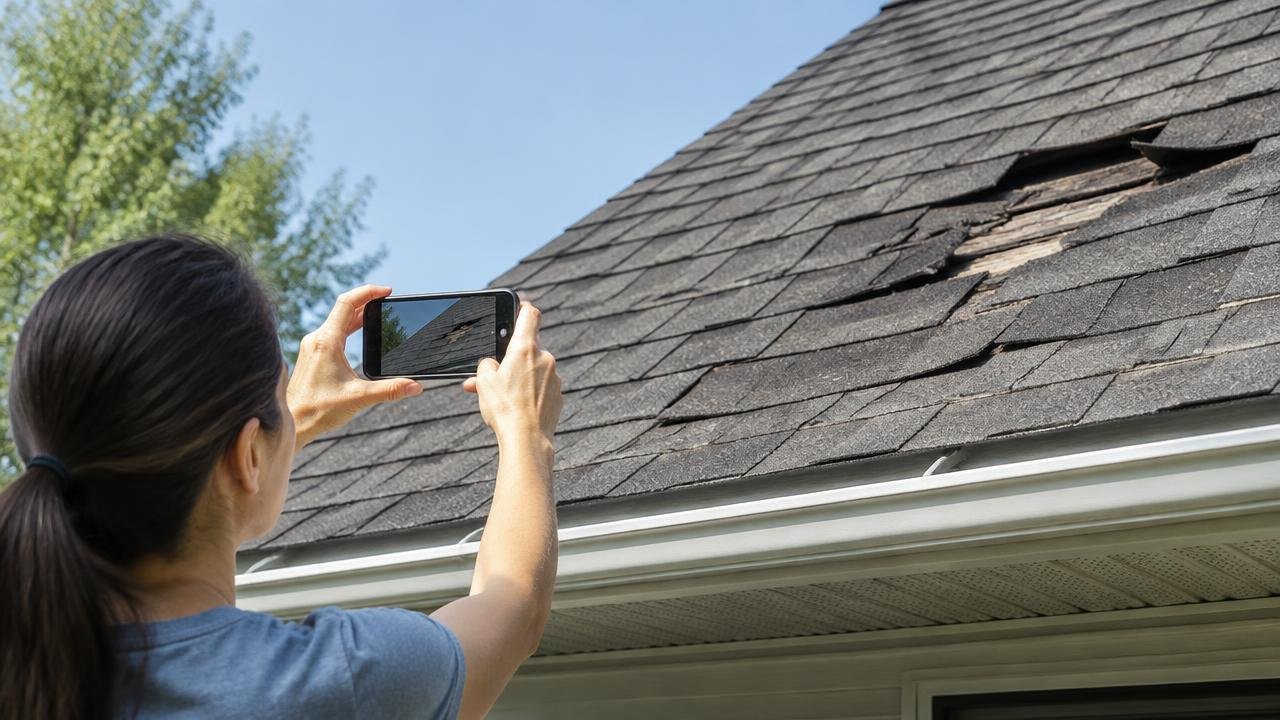
A damaged roof after hail, wind, or a severe storm can leave Indianapolis homeowners unsure what to do first. Filing an insurance claim is a process of documenting the loss, promptly notifying your insurer, understanding the policy, and coordinating appropriate repairs. A roofing contractor can help identify visible concerns, but the insurer determines coverage under the specific policy; no contractor can guarantee an approval or promise a particular settlement.
Start with safety and reasonable measures to prevent further damage, then keep careful records. The outline below is general information, not legal or insurance advice. Your policy deadlines, deductibles, exclusions, and claim procedures control. If you suspect storm damage, request a roof inspection and review what to do after a storm damages your roof.
1. Make the area safe and prevent additional damage
Do not climb onto a wet, steep, icy, or visibly unstable roof to investigate. Stay clear of downed power lines, hanging branches, damaged chimneys, and ceilings that are bulging or sagging. If water is near electrical fixtures, avoid the area and seek qualified help. A tarp or temporary covering may be appropriate when safely installed, but emergency work should be performed by people equipped for the conditions. Do not risk injury to obtain a photograph.
Most policies expect reasonable steps to limit additional loss. That does not mean undertaking permanent repairs before documenting the original damage. Keep receipts for emergency tarping, water extraction, and temporary materials; photograph the condition before and after work where safe. Ask your insurer how it wants emergency mitigation handled and retain invoices and contractor notes. For active water entry, a qualified professional can help with roof leak detection and temporary roof repair.
- Protect people first; keep children and pets away from hazards.
- Use buckets or move belongings only when doing so is safe.
- Record dates, weather observations, and emergency expenses.
- Do not discard damaged materials until the insurer advises whether inspection is needed.
2. Review your policy and notify the insurer
Locate the declarations page and relevant policy language. Check the deductible, covered causes of loss, exclusions, duties after loss, deadlines for notice, and any special roof-payment terms. Policies differ: some settle covered damage based on replacement cost subject to conditions, while others may apply depreciation or a different valuation method. Wind or hail deductibles may be calculated differently from a standard deductible. Ask the insurer to explain unfamiliar terms in writing rather than assuming all storm-related work is covered.
Report the event promptly using the contact method specified by your carrier. Provide the date or reasonable date range, what you observed, any temporary steps taken, and whether water entered the building. Be factual and avoid guessing at hidden damage or describing ordinary wear as storm damage. Save the claim number and the names, dates, and summaries of conversations. Ask how to submit photos, receipts, and contractor documentation, and whether the insurer wants to inspect before non-emergency work proceeds.
3. Document visible damage and gather records
Take clear ground-level photographs of damaged siding, gutters, screens, shingles, fallen limbs, and interior stains, if accessible without entering an unsafe area. Include wide shots that show where damage is located and close-ups for detail. Note when each image was taken. Keep older inspection reports, maintenance records, receipts, and any photographs that show the roof’s prior condition. These materials can help distinguish the recent event from pre-existing deterioration, though they do not by themselves determine coverage.
A professional inspection can describe observable conditions and recommend next steps. Request a written report that separates storm-related observations from maintenance issues where possible. Ask the contractor to explain the findings in plain language, show representative photographs, and identify any limits of a visual inspection. Central Indy Roofing offers free roof inspections and estimates; an inspection is not an insurance decision. For hail concerns, see how to tell if a roof has hail damage.
- Keep a dated photo folder and copies of every document submitted.
- Write down the storm date and the first date damage or leaking was noticed.
- Keep samples or removed materials only if a professional says doing so is safe and useful.
4. Prepare for the adjuster’s inspection
The insurer may send an adjuster to inspect the property. Ask about the appointment, who will attend, and whether interior access is necessary. Make sure the adjuster can see reported areas without putting anyone at risk. If a contractor attends, that person can explain observed roof conditions and answer questions about a proposed scope, but the policyholder should remain involved and communicate directly with the insurer. Do not feel pressured to sign an agreement you have not read or understand.
After the visit, request the adjuster’s written estimate and explanation of what was included or omitted. Compare the listed work with the observed conditions, checking quantities, roof sections, flashing, ventilation components, underlayment, and any interior repairs that were reported. A difference in opinion is not automatically evidence of bad faith or proof that every requested item is covered. Send factual, itemized questions and supporting photographs through the insurer’s stated process. If the disagreement is significant, consider an independent licensed public adjuster or an attorney, understanding that their services may involve fees.
5. Review the scope, payment, and repair plan
An insurer’s estimate is not necessarily a contractor’s final price, and a contractor’s proposal does not change policy coverage. Compare the proposed scope to the roof’s actual needs and applicable local requirements. Ask for a written estimate with materials, labor, disposal, flashing details, and exclusions identified. Clarify who will communicate supplements or additional findings to the carrier. Never accept a promise that a deductible can be waived or hidden; ask the insurer and contractor to explain lawful payment responsibilities clearly.
Before work begins, confirm the contractor’s business identity, insurance, references, written contract, payment schedule, and process for change orders. Avoid paying the full amount upfront or signing over benefits without understanding the legal and financial consequences. Keep copies of contracts, permits if applicable, invoices, photographs during construction, and completion documents. If you need a full replacement rather than a repair, learn about roof replacement and the available residential roofing services.
6. If the claim is denied or the scope seems incomplete
Read the denial or partial-coverage letter carefully; it should identify the policy basis and relevant facts. Ask the carrier what additional information could be considered and whether a reinspection or supplemental review is available. Submit organized evidence rather than repeating a general disagreement: identify the location, the observed condition, the related estimate line, and the supporting photo or report. Keep the tone professional and track submission dates. Your policy may set deadlines for disputes, so do not let a conversation delay a required written step.
If the insurer’s explanation remains unclear, contact your state insurance department for consumer information, or seek independent professional advice. Do not assume that a contractor can negotiate or interpret coverage on your behalf. A sound repair decision should address the roof’s condition even when a claim does not cover all work. For help arranging an inspection or estimate, contact Central Indy Roofing for a free roof inspection or call 317-836-2455.
Frequently Asked Questions
- Should I get an inspection before calling insurance?
- You may seek a qualified inspection to understand visible conditions, but promptly follow your policy’s notice requirements. Do not delay reporting while waiting for a contractor, and do not make unsafe roof access.
- Can a roofer guarantee my claim will be approved?
- No. Coverage depends on your policy and the insurer’s evaluation. A roofer can document observed roof conditions and provide a repair estimate, but cannot guarantee an insurance decision.
- Should I start permanent repairs before the adjuster visits?
- Address urgent safety and temporary mitigation needs, documenting them and keeping receipts. Ask the insurer about inspection before permanent work when practical, unless immediate action is necessary to prevent further damage.
- What if the contractor estimate is higher than the insurer’s?
- Compare the scopes line by line and request an explanation of differences. Provide relevant documentation to the insurer and ask about its review process; the insurer’s coverage decision and your contract are separate matters.