
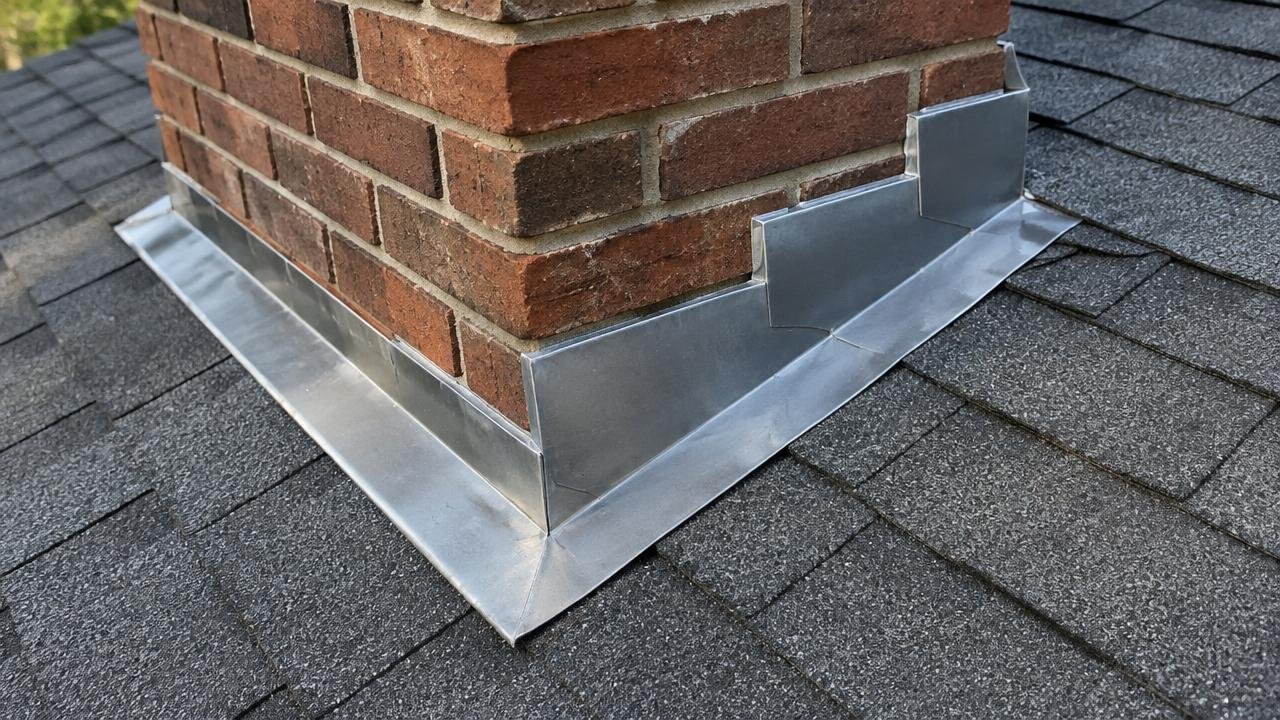
When homeowners think about their roof's ability to keep out rain and snow, they almost always picture asphalt shingles. While shingles cover the vast majority of your roof deck, they are not designed to protect every angle, seam, and joint. In areas where roof planes intersect, meet vertical walls, or abut chimneys and vent pipes, water flows in heavy concentrations. That is where roof flashing enters the picture.
Roof flashing is a thin, impervious material—typically galvanized steel, aluminum, or copper—installed to direct water away from critical vulnerable zones on your roof. Without properly installed flashing, water would readily seep beneath shingles and run straight into your attic, ceiling drywall, and wall framing.
Unfortunately, flashing is also one of the most common failure points on both residential and commercial structures throughout Central Indiana. When flashing deteriorates, cracks, or pulls loose, hidden moisture damage often follows quickly. Understanding what flashing does, the various types used on your home, and why it breaks down helps you address small problems before they escalate into massive structural repairs.
What Is Roof Flashing and What Does It Do?
Roof flashing acts as a continuous water barrier installed across seams, joints, and transitions on your roof. Shingles do an excellent job of shedding water down a flat, consistent slope. However, wherever there is an interruption in that plane—such as a valley between two sloping sections, a dormer, a skylight, or a plumbing vent stack—water can easily find gaps between individual roofing components.
Flashing works on the simple principle of gravity. By layering sheets of formed metal beneath the upper shingles and over the lower shingles or vertical walls, flashing creates a shingled water path. When rainwater strikes a vertical wall or runs into a roof valley, it flows onto the metal flashing rather than slipping into the underlying roof decking. As long as the flashing remains properly sealed and positioned, water harmlessly drains down to your gutters and off the structure.
Quality residential roofing systems rely on flashing made from durable metals. While aluminum and galvanized steel are the industry standards due to their balance of strength and affordability, high-end homes and historic properties in Indianapolis often utilize copper for its exceptional longevity and natural corrosion resistance.
Common Types of Roof Flashing Found on Central Indiana Homes
A typical home features several distinct styles of flashing depending on the architectural features present on the roof. Each profile is engineered to address a specific transition point and direct water away from vulnerable building joints.
A failure in even one of these specialized flashing profiles can leave an entire section of your home vulnerable to water intrusion during Indianapolis thunderstorm season.
- Step Flashing: L-shaped metal pieces woven under individual shingles where a sloped roof meets a vertical wall, such as alongside dormers or side walls.
- Counter Flashing: Metal bent and set into masonry mortar joints (such as on brick chimneys) that hangs downward to overlap the base flashing underneath.
- Valley Flashing: Wide, W-shaped or V-shaped metal channels installed in the valleys where two sloping roof sections intersect and carry massive water volume.
- Drip Edge: T-shaped or L-shaped metal installed along the eaves and rakes to direct water runoff away from the fascia board and directly into the gutter system.
- Vent Pipe Boots: Conical or flat metal bases fitted with a flexible rubber collar that slips snugly around plumbing vents protruding through the roof deck.
Why Does Roof Flashing Fail?
While metal flashing is inherently tough, it operates under extreme environmental stress year-round. In Indiana, roofs endure scorching summer heat, freezing winter temperatures, severe spring thunderstorms, and occasional hail. Over time, these conditions take a heavy toll on metal components and sealants.
One of the leading causes of flashing failure is thermal expansion and contraction. During an Indianapolis summer, a dark roof can exceed 150 degrees Fahrenheit, causing metal flashing to expand. In winter, temperatures plunge below zero, causing rapid contraction. This perpetual movement puts immense strain on roofing nails, masonry anchors, and caulk joints, eventually pulling fasteners loose and opening tiny gaps.
Another major factor is improper initial installation. Flashing requires meticulous craftsmanship. If an inexperienced roofer relies heavily on roofing tar or silicone sealant instead of proper mechanical joints and step flashing patterns, the seal will quickly degrade under UV radiation. Once the dried-out tar cracks, water immediately finds its way inside, leading homeowners to search for reliable leak detection services to isolate the hidden source.
- Corrosion and Rust: Moisture trapped under debris or prolonged exposure can cause untreated or damaged galvanized steel to rust through completely.
- Deteriorated Rubber Collars: The rubber boots on plumbing vent flashing dry rot and crack from intense sun exposure after 7 to 10 years.
- Storm and Wind Damage: High winds can lift loose flashing edges, allowing driving rain to blow directly underneath.
- Structural Settling: Natural foundation settling shifts framing and brick chimneys, pulling counter flashing away from mortar seams.
Signs Your Flashing Needs Immediate Attention
Because flashing is frequently installed tucked beneath shingles or high up around chimneys, identifying early warning signs requires a sharp eye. You do not have to wait for water to drip through your living room ceiling to know there is a problem.
From the ground, you can use binoculars to inspect roof transitions. Look for visibly warped, rusted, or missing pieces of metal along chimney walls, dormers, and valleys. If you see peeling caulk or dark, cracked roofing cement slopped across flashing joints, a temporary patch has likely reached the end of its life.
Inside your home, check the attic space during daylight or directly after a heavy storm. Damp insulation, rusted drywall screws, or water staining on rafters near chimneys and wall transitions indicate water entering via faulty flashing. If you are experiencing mysterious indoor moisture, exploring Why Is My Roof Leaking? can help you trace the issue back to flashing vulnerabilities.
Can Damaged Flashing Be Repaired, or Does the Roof Need Replacement?
Homeowners often worry that flashing issues automatically mean they must replace their entire roof. Fortunately, flashing issues can frequently be resolved independently if caught early. If your asphalt shingles are relatively young and healthy, scheduling dedicated flashing repair services can fix the water barrier without disrupting the surrounding roof plane.
During a flashing repair, a roofing professional carefully removes the surrounding shingles, inspects the underlying decking for rot, replaces damaged metal components, installs fresh ice and water shield underlayment, and reinstalls shingles seamlessly. Chimney counter flashing can be ground out and tuckpointed with fresh mortar to recreate an impervious mechanical lock against masonry.
However, if the flashing has been leaking unnoticed for months or years, the plywood decking and rafters underneath may have rotted. In cases where the shingles are already approaching the end of their operational lifespan, conducting isolated repairs may not be cost-effective. At that point, combining flashing replacement with comprehensive roof replacement ensures full, lasting protection.
Schedule a Professional Flashing Assessment with Central Indy Roofing
Protecting your home from water intrusion requires every part of your roofing system to work in unison. Flashing may seem like a minor detail compared to thousands of square feet of shingles, but it protects the single most vulnerable zones on your structure. Regular inspections ensure small gaps, dried-out rubber boots, and loose joints are addressed before expensive water damage takes hold.
At Central Indy Roofing, our experienced technicians understand the unique weather stresses faced by Central Indiana properties. Whether you need isolated professional roof repair for a leaking chimney or an evaluation following a severe hail storm, our team provides transparent, expert assessments.
Don't wait for minor flashing leaks to turn into costly structural repairs. Contact Central Indy Roofing today at 317-836-2455 to schedule your free roof inspection and estimate. We are ready to help protect your home or business with trusted, long-lasting roofing solutions.
Frequently Asked Questions
- How long does roof flashing typically last?
- Quality metal flashing made of aluminum or galvanized steel generally lasts 20 to 30 years, often mirroring the life of your asphalt shingles. However, neoprene rubber boots on plumbing pipe vents typically only last 8 to 12 years before drying out, cracking, and requiring replacement.
- Can I use roof sealant or caulk to fix leaking flashing myself?
- Sealants and roofing cement provide only temporary emergency fixes. Flashing relies on precise overlapping metal geometry to divert water. Slapping caulk or tar over a failing seam will eventually crack under UV exposure and trap moisture underneath, accelerating wood rot. Professional replacement is always recommended.
- Does homeowner's insurance cover flashing leaks?
- Coverage depends on the cause of the failure. If your flashing was torn away by sudden severe storm winds or damaged by hail, homeowner's insurance typically covers the repair. However, if the leak resulted from gradual rust, dried-out sealants, or deferred maintenance, insurance will usually classify it as normal wear and tear.
- Should roof flashing always be replaced when getting a new roof?
- In most cases, yes. While some heavy-gauge copper or perfectly intact step flashing can occasionally be reused, installing new flashing ensures that your brand-new shingles are backed by a brand-new water barrier. Reusing aged, fatigued metal compromises the integrity of your new roof.