
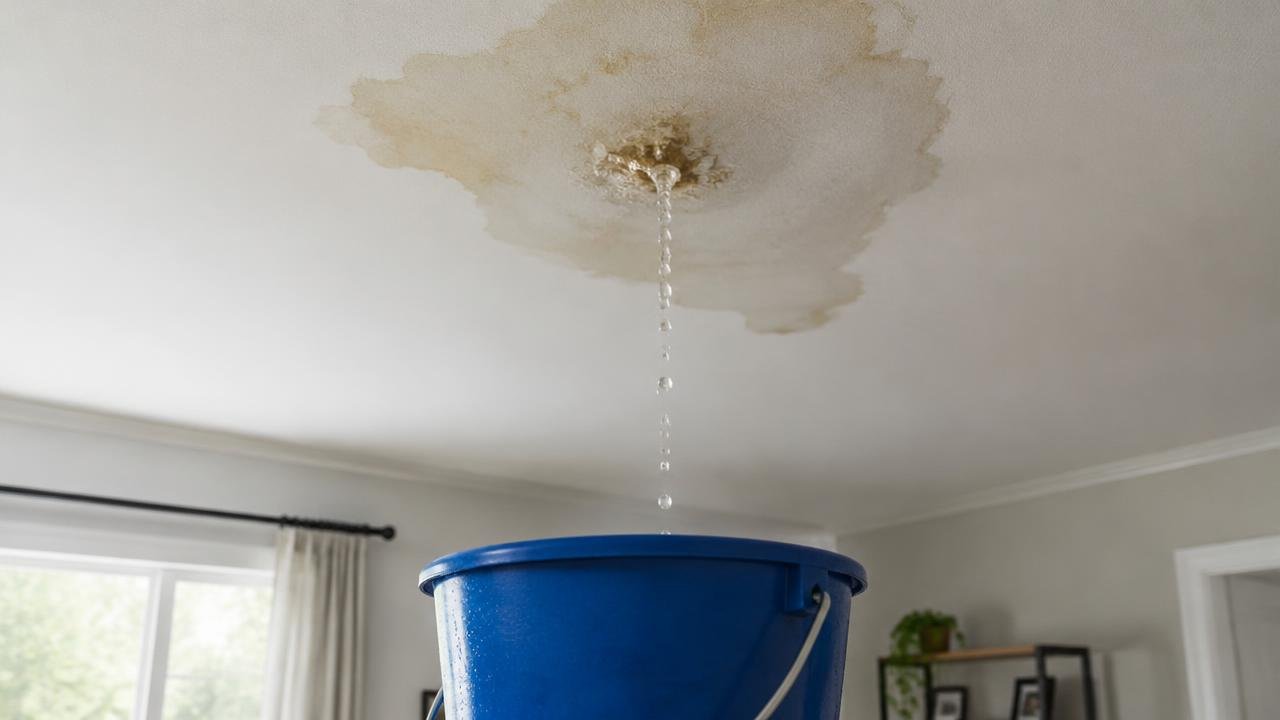
A roof leak is often first noticed as a ceiling stain, a drip near a window, or damp insulation after rain. The visible water may appear far from where it entered: roof framing and ceiling materials can direct moisture sideways before it becomes obvious indoors. That makes a stain useful evidence, but not a reliable map to the exact opening. Promptly limiting interior damage and finding the source can help prevent repeated wetting and larger repairs.
Do not climb onto a roof to investigate during rain, wind, snow, or icy conditions. The cause might be damaged shingles, flashing, a clogged drainage path, or a non-roof source such as plumbing or condensation. This guide covers frequent possibilities and sensible next steps. If water is entering now, read what to do when your roof leaks and arrange professional leak detection.
1. Damaged, missing, or aging shingles
Wind can lift or displace shingles, while falling branches and foot traffic can damage the surface. Hail may leave marks or compromise materials, and prolonged exposure to sun, temperature swings, and moisture gradually ages a roof. Missing tabs, lifted edges, exposed fasteners, or cracked shingles can allow water to reach the layers below. A roof can also leak even when damage is not obvious from the ground, because the entry point may be small or concealed by overlapping materials.
A repair should address the underlying condition, not simply cover a stain from inside. The appropriate solution depends on roof age, material condition, the location and extent of damage, and whether underlayment or decking is affected. A trained roofer can assess whether a localized roof repair is practical or whether broader work is warranted. If a storm recently passed, document the date and visible conditions and ask about a roof inspection.
- Look from the ground for visibly displaced or missing shingles.
- Note whether the leak follows wind-driven rain or occurs in dry weather.
- Do not pull, lift, or walk on roofing materials to test them.
2. Failed flashing around roof transitions
Flashing is the water-shedding material installed where a roof meets a wall, chimney, skylight, vent, or another roof plane. These transitions interrupt the simple flow of water down a roof and require carefully layered details. Sealant can crack, flashing can corrode or loosen, and poorly installed pieces may let water behind the exterior finish. A leak near a chimney or wall can therefore originate at the roof intersection rather than in the shingles above the indoor stain.
Flashing problems can be difficult to confirm without close inspection, and adding caulk over an uncertain opening may hide rather than solve the problem. A repair may require removing surrounding roofing to restore proper overlap and drainage. If the leak is near a chimney, skylight, dormer, or wall, mention that location when scheduling flashing repair. Photographs of the interior stain and the exterior area, taken safely from the ground, can help guide the inspection.
3. Valleys, roof penetrations, and vents
A valley collects runoff from two sloping roof sections, so leaves, debris, damaged valley lining, or an installation defect can interfere with drainage. Pipes, exhaust vents, skylights, and other penetrations also rely on properly fitted flashing or boots. Rubber components can become brittle, fasteners may loosen, and a seal may deteriorate. Water entering around a penetration can travel along a rafter or pipe before reaching the ceiling, making the actual source easy to misidentify.
Keep gutters and accessible ground-level drainage areas clear, but do not remove debris from a steep or high roof yourself. Avoid sealing a vent shut: roof penetrations must continue to perform their intended function. A roofer can inspect the flashing, surrounding material, and attic evidence to determine whether the issue is isolated or part of a broader drainage concern. If a roof opening has been exposed, ask about temporary protection while a durable repair is planned.
4. Clogged gutters, ice, and water backup
Leaves, granules, and other debris can obstruct gutters or downspouts and cause water to overflow near fascia and siding. Poor slope, loose hangers, or an undersized drainage path may also contribute. Water backup at the roof edge can wet trim and, under some conditions, reach vulnerable roof details. In winter, snowmelt that refreezes near cold eaves can contribute to ice dams; backed-up water may then find its way beneath roofing. A leak during a thaw does not necessarily mean a shingle field is the only problem.
Observe whether water spills over the gutter during rain and whether downspouts discharge away from the foundation. Have elevated gutter work done safely. Improving drainage may involve gutter installation or seamless gutters, but a gutter upgrade will not correct failed flashing or damaged roofing. Ice-related problems may also require attention to attic air sealing, insulation, and ventilation, rather than simply removing ice from the roof.
5. Attic condensation or plumbing mistaken for a roof leak
Not every ceiling stain comes through the roof covering. Bathroom fans that discharge into an attic, insufficient ventilation, air leakage from the living space, or humid indoor conditions can create condensation on cold surfaces. Plumbing lines, heating and cooling equipment, and bathroom fixtures may leak above a ceiling as well. Condensation can be more noticeable in cold weather, while plumbing leaks may recur when a fixture is used. Patterns and timing help, but a professional may need to inspect the attic and nearby systems to distinguish causes.
If safe access is available, look for damp insulation, water trails on framing, rusted fasteners, or frost without touching electrical equipment or disturbing insulation. A roof professional can assess the roof and attic; a plumber or HVAC professional may be needed if the evidence points to a mechanical source. Effective roof ventilation should be designed as a balanced system and does not replace fixing roof openings or correcting indoor moisture sources.
6. What to do while arranging a diagnosis
Place a container beneath active drips if safe, move furniture and valuables, and use towels to protect nearby surfaces. If water is near lighting or electrical equipment, do not touch the fixture; keep away and contact an appropriate professional. A sagging ceiling can hold water and may collapse, so keep people out of the area. Photograph interior damage, note the weather and timing, and record any emergency work or expenses. Do not assume the first visible stain identifies the source.
Ask an inspector to explain what was checked, what evidence points to the suspected entry point, and whether the repair is temporary or permanent. Request a written scope and clarify whether damaged decking, insulation, or interior materials are included. If the roof is broadly worn or recurring leaks occur in multiple areas, compare repair and replacement options with clear reasoning rather than relying on a quick patch. Central Indy Roofing can help evaluate the condition and provide a free roof inspection; call 317-836-2455.
Frequently Asked Questions
- Why does my roof leak only during heavy rain?
- Heavy or wind-driven rain can overwhelm a vulnerable detail, push water beneath an edge, or reveal a drainage problem that lighter rain does not. The timing is useful diagnostic information, but does not identify the source by itself.
- Can I fix a roof leak with caulk?
- Caulk may be appropriate as part of a properly designed repair in limited situations, but applying it over an unknown leak is not a dependable diagnosis. Correct repairs restore the material and water-shedding detail causing the entry.
- Can a roof leak cause mold?
- Repeated or prolonged moisture can create conditions for microbial growth and damage building materials. Address the water source promptly and have wet materials evaluated and dried appropriately.
- Should I replace my roof because it leaked once?
- Not necessarily. A localized failure may be repairable, while widespread aging, recurring leaks, or extensive damage can support replacement. An inspection should identify the cause and explain the options.