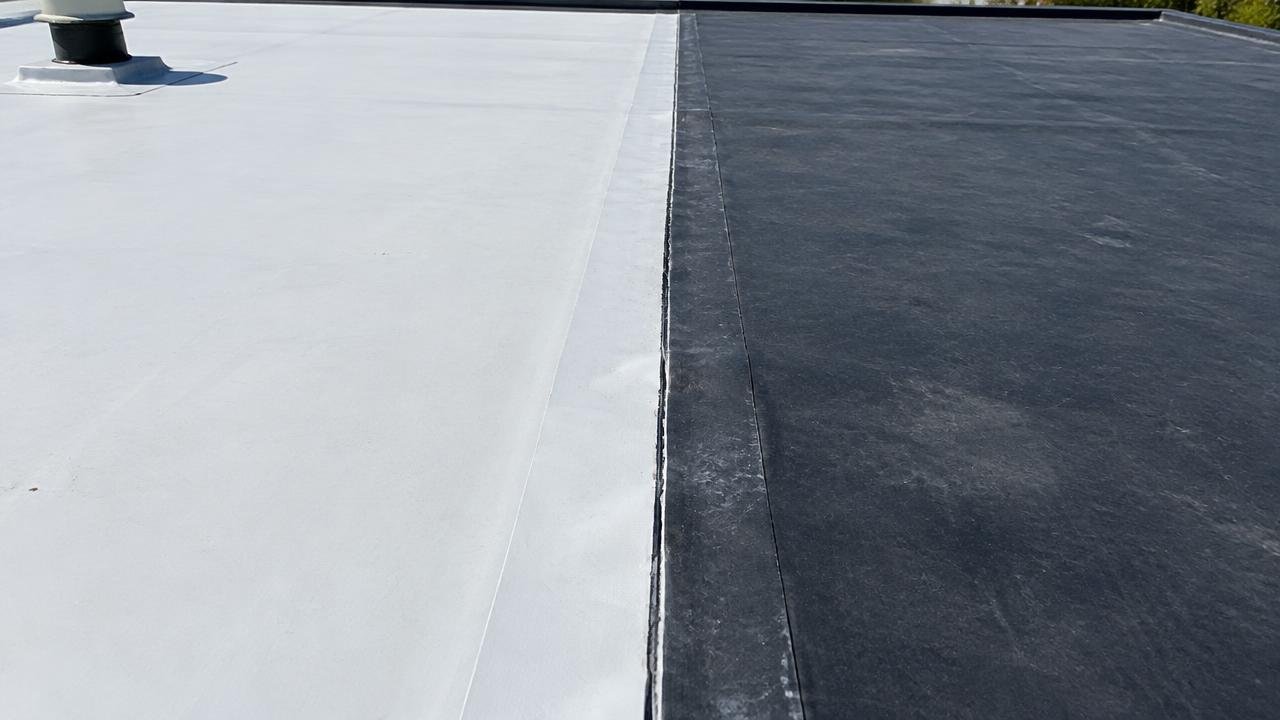
When investing in a low-slope or flat roof for your commercial property in Central Indiana, two single-ply membrane systems consistently dominate the conversation: Thermoplastic Polyolefin (TPO) and Ethylene Propylene Diene Monomer (EPDM). Both materials have earned solid reputations across the commercial building sector, yet they function quite differently when faced with real-world weather patterns, temperature extremes, and facility demands.
Selecting the right membrane is not simply an aesthetic preference; it directly impacts your property's energy consumption, maintenance budget, interior comfort, and roof service life. From sweltering midwestern summers to sub-zero freeze-and-thaw winter cycles, commercial roofs in Indianapolis require materials that maintain elasticity, seam integrity, and puncture resistance. This guide breaks down the essential differences between TPO and EPDM roofing so you can make an informed, cost-effective choice for your facility.
Understanding TPO Roofing: Benefits and Potential Drawbacks
Thermoplastic Polyolefin (TPO) is a single-ply, heat-weldable sheet membrane made from ethylene propylene rubber and polypropylene. Introduced to commercial construction in the 1990s, TPO quickly gained widespread adoption largely due to its bright, reflective white surface and strong seam construction. Unlike older systems glued with liquid adhesives, TPO seams are fused together using high-temperature robotic hot-air welders, creating a permanent physical bond that is often stronger than the membrane itself.
For property owners managing high cooling loads, TPO delivers remarkable thermal benefits. Its bright white surface reflects up to 80 percent of solar radiation, dramatically cutting the amount of heat transferred into the structure during humid Indiana summers. Additionally, TPO offers natural resistance to mold growth, dirt accumulation, and chemical exposure, making it an appealing option for diverse operations like medical centers, manufacturing sites, and retail storefronts.
- Hot-air welded seams provide continuous monolithic seals that resist standing water.
- High solar reflectivity lowers cooling demands and combats the urban heat island effect.
- Resistant to industrial pollutants, mild chemical runoff, and biological growth.
- A relatively newer material compared to rubber, meaning long-term formulations continue to evolve.
Understanding EPDM Roofing: The Proven Synthetic Rubber Standard
Ethylene Propylene Diene Monomer (EPDM) is a heavy-duty synthetic rubber roofing membrane that has been installed on commercial buildings across North America for more than six decades. Commonly referred to as 'rubber roofing,' EPDM is typically manufactured in black sheets, although white versions are available at an increased material cost. Its extensive track record gives commercial building owners a clear, proven understanding of how the system performs over multi-decade spans.
EPDM is celebrated for its incredible flexibility and elongation characteristics. In climates like Indianapolis where winter temperatures can drop below zero while summer heat pushes surface temperatures past 140 degrees Fahrenheit, EPDM contracts and expands without becoming brittle or cracking. The membrane sheets are traditionally joined using formulated seam tapes and primers or liquid adhesives rather than heat welding.
- Decades of proven performance under harsh, variable environmental conditions.
- Exceptional flexibility that accommodates normal thermal building expansion and contraction.
- Naturally absorbs thermal energy during long, cold Indiana winters, aiding internal heating efficiency.
- Seams rely on adhesive chemical primers and tapes that require diligent routine inspections over time.
Durability, Seam Strength, and Indiana Weather Resistance
When comparing TPO vs EPDM roofing in Central Indiana, weather resilience is paramount. Our local climate subject flat roofs to high winds, frequent hail events, driving rain, and extended freeze-thaw cycles that test the mechanical limits of any membrane. Hail performance between the two depends heavily on membrane thickness (measured in mils, such as 45, 60, or 90 mil) and whether the membrane is reinforced with polyester scrim.
Seam failure remains the leading cause of flat roof leaks across the Midwest. Because TPO seams are heat-welded into a single continuous sheet, they are less prone to breaking down under ponding water compared to glued seams. However, black EPDM membranes feature superior inherent UV stability. Even after decades of baking in the sun, high-quality EPDM resists thermal breakdown remarkably well. To better understand expected lifecycles under local conditions, review our guide on how long a flat roof lasts on commercial facilities.
If your facility has rooftop mechanical equipment, cooling towers, or regular foot traffic for maintenance, puncture resistance becomes critical. Thicker 60-mil or 80-mil reinforced TPO membranes hold up exceptionally well against accidental tool drops and technician footpaths. EPDM is also resilient against physical impacts due to its rubbery elasticity, but unreinforced rubber can tear if caught on sharp rooftop debris.
Energy Efficiency: Cooling Loads vs. Heating Loads
A key distinction between white TPO and traditional black EPDM is how they interact with sunlight and building energy budgets. White TPO is an Energy Star-rated cool roofing product with a high Solar Reflectance Index (SRI). By reflecting radiant solar energy, TPO minimizes rooftop surface temperatures, reducing the strain on commercial rooftop HVAC units during June, July, and August. For climate-controlled facilities such as warehouse roofing operations or multitenant office plazas, this can translate into noticeable utility savings.
Conversely, the classic dark surface of EPDM absorbs solar radiation. In regions with long, severe winters, some building engineers argue that black rubber roofs reduce indoor heating costs by naturally warming the building envelope when snow melts. However, summer peak electrical demand charges often cost commercial operators far more per kilowatt-hour than winter gas heating, which often tips the financial scale in favor of reflective TPO for many suburban and urban Indiana properties.
Cost Comparison: Upfront Installation and Long-Term Value
Cost is a decisive factor for any capital improvement project. In general commercial roofing installations, both TPO and EPDM fall into similar initial price brackets, typically ranging from $5.50 to $10.00 or more per square foot installed, depending on deck conditions, insulation R-value requirements, tear-off needs, and membrane thickness. To explore overall commercial project budgeting, check out our detailed overview of how much a commercial roof costs.
EPDM material roll costs are often slightly lower, and single-ply rubber can be installed quickly across open, unobstructed roof areas using large 50-foot or 100-foot wide sheets. However, extensive penetrations, parapet walls, and HVAC curbs require substantial detail work with tapes and flashing adhesives, which drives up labor costs. TPO requires specialized heat-welding machinery and skilled roofers trained in thermal seam calibration, but once crews are dialed in, installation across complex commercial surfaces moves rapidly. When evaluating your capital outlay for commercial property roofing, factoring in long-term maintenance visits is just as crucial as the upfront proposal.
Which Membrane Fits Your Facility? Final Recommendations
Neither membrane is universally superior for every commercial facility; the right choice comes down to your building design, internal operations, and budget timeline. TPO is frequently the top recommendation for properties with substantial air-conditioning demands, restaurants or industrial plants with kitchen or chemical exhaust (as TPO resists greases better than standard EPDM), and buildings with intricate rooflines featuring numerous vents, skylights, and pipe boots.
EPDM remains an outstanding solution for large, low-slope footprints, colder-temperature storage applications, or facilities located under tree canopies where white TPO would rapidly soil and lose its reflective benefits. Regardless of which single-ply membrane fits your property goals, professional design, proper insulation fastening, and meticulous perimeter flashing are essential to avoid premature failure.
Central Indy Roofing provides comprehensive commercial roofing services, including professional roof inspections and preventive maintenance programs throughout Indianapolis and the surrounding counties. Our experienced commercial specialists will walk your deck, assess your existing substrate, evaluate drainage and thermal performance, and present clear options tailored to your facility. Schedule your free roof inspection today or call 317-836-2455 to discuss your commercial roofing project with our team.
Frequently Asked Questions
- How long do TPO and EPDM roofs last in Indiana?
- A properly installed and maintained TPO roof typically lasts between 20 and 25 years. EPDM has a proven track record of lasting 25 to 30 years or more because synthetic rubber exhibits exceptional long-term resistance to ultraviolet light and thermal cycling. Regular routine maintenance on seams and flashing is key to maximizing either membrane's lifespan.
- Can you install TPO directly over an existing EPDM roof?
- In many retrofit situations, you can install a new TPO roof over an existing EPDM membrane, provided local commercial building codes permit an additional roof layer and the existing insulation and decking are structurally sound and dry. A recovery board or separation layer is typically installed over the old rubber before laying down the new TPO to ensure proper adhesion and prevent chemical interaction.
- Which roofing membrane is easier to repair, TPO or EPDM?
- Both membranes can be repaired effectively, but they require different methods. Small punctures or cuts in EPDM can easily be patched using self-adhering rubber patch kits, membrane cleaners, and primers. Older TPO roofs can sometimes be trickier to heat-weld because atmospheric oxidation hardens the top layer over time; the surface must be thoroughly prepped and scrubbed with specialized solvent cleaners before a new thermoplastic patch can be properly welded.
- Is TPO or EPDM better for flat roofs with standing water?
- No commercial single-ply membrane is engineered to act as a ponding water pond liner, and standing water should always be addressed by correcting structural slope or adding tapered insulation. That said, TPO's heat-welded seams are physically bonded and less susceptible to the adhesive breakdown that continuous ponding water can inflict on glued or taped EPDM seams over several years.