
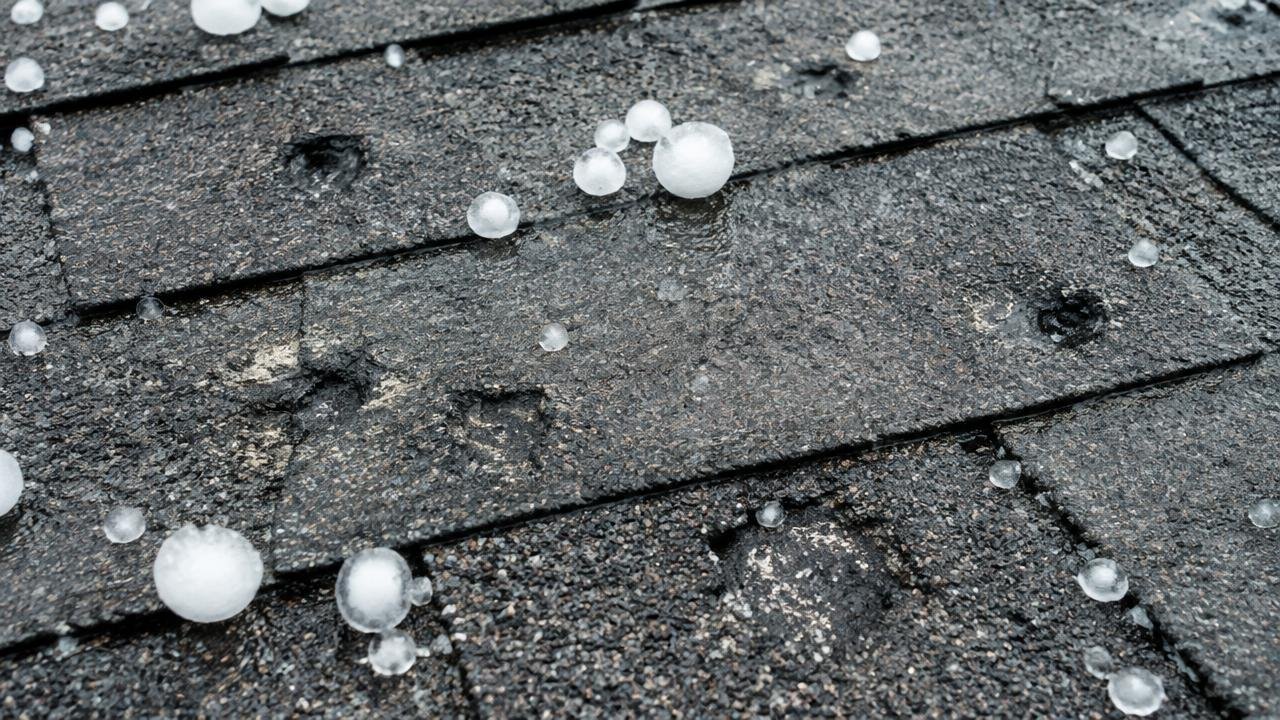
Severe thunderstorms frequently sweep across Central Indiana every spring and summer, bringing powerful downdrafts, flash flooding, and hail. While golf-ball or baseball-sized hailstones cause unmistakable destruction to windows, vehicles, and skylights, smaller pea- to quarter-sized hail can inflict subtle yet devastating damage to asphalt shingles that often goes unnoticed for months or even years.
Because climbing onto a residential roof is inherently dangerous and rooftop damage can be difficult to diagnose from the ground, many homeowners in Indianapolis, Carmel, Greenwood, and surrounding communities are left wondering how to tell if their property sustained genuine hail damage. Left unaddressed, hail strikes degrade the weatherproofing capabilities of your roofing materials, eventually triggering attic leaks, rotten roof decking, and costly structural repairs.
In this comprehensive guide, we examine the clear physical signs of hail impacts, how to safely inspect your property from ground level, what certified inspectors look for on asphalt shingles, and what steps you should take to protect your home and file a successful insurance claim.
Ground-Level Clues: Checking for Collateral Hail Damage
Before setting up a ladder or attempting to inspect your shingles directly, you can gather critical clues about the severity of a storm simply by walking around your yard. Hail does not fall in a vacuum; if stones were dense and large enough to bruise your shingles, they almost certainly left visual evidence on softer materials around the perimeter of your house.
Insurance adjusters regularly inspect collateral elements first when evaluating a potential storm damage claim. If downspouts and metal window wraps show widespread pitting, it creates a compelling timeline confirming that hail hit your immediate neighborhood with enough force to compromise the roof.
Take a slow walk around your home's exterior and inspect the following items for fresh impact marks:
- Gutters and downspouts: Dents, dings, and dimples on aluminum gutters or decorative downspouts.
- Outdoor air conditioning units: Bent or crushed cooling fins on the exterior metal condenser coils.
- Siding and trim: Splintered vinyl siding, chipped paint on wooden siding, or dents on aluminum fascia.
- Outdoor living areas: Cracks in plastic patio furniture, chipped paint on wooden decks, or tears in window screens.
- Mailboxes and utility fixtures: Dented metal mailboxes, cracked plastic meter covers, and dented outdoor light fixtures.
What Hail Damage Looks Like on Asphalt Shingles
When hailstones strike asphalt shingle roofing, the impact dislodges the protective mineral granules pressed into the shingle surface. These granules serve as a sacrificial armor that shields the underlying asphalt-saturated fiberglass mat from ultraviolet (UV) sunlight degradation.
A fresh hail hit on an asphalt shingle typically produces a dark, circular divot where granules have been knocked away. Unlike normal shingle aging—which causes gradual, uniform granule loss across entire sections of the roof—hail hits appear as concentrated, random blemishes with no distinct pattern. When you touch a fresh impact mark, it often feels soft and spongy beneath your finger, similar to the bruised skin of an apple, indicating that the inner fiberglass mat has fractured.
In severe cases, large hail can punch clean punctures through the shingle or fracture the shingle tabs along edges and corners. In older roofs where shingles have turned brittle with age, hail strikes may cause spider-web cracks that radiate outward from the point of impact.
- Bruised surfaces: Dark, circular spots that feel soft or spongy when pressed.
- Granule loss: Loose granules pooling at the discharge points of your downspouts or bare black asphalt exposed on the shingle.
- Cracked or fractured mats: Visible tears or split edges running through the body of the shingle.
- Curled or lifted tabs: Violent hail impacts that break shingle sealant strips, leaving tabs vulnerable to wind lift.
The Hidden Danger: Why Delayed Roof Leaks Occur
Homeowners often assume that if water is not actively dripping from their ceiling following a severe hailstorm, their roof must have escaped harm. Unfortunately, hail damage is rarely an instantaneous leak event; rather, it sets off an accelerated cycle of premature deterioration.
Once hail knocks away the mineral granules, the sun's harsh ultraviolet rays begin baking the exposed petroleum-based asphalt. Over several months of summer heat, this unprotected asphalt dries out, shrinks, and cracks. When Indiana winter arrives, freeze-thaw cycles drive moisture into those tiny crevices, expanding the fractures until water reaches the underlayment and plywood decking beneath.
By the time a water stain appears on your upstairs drywall, the damage has usually spread across insulation, structural rafters, and roof sheathing. Understanding what to do after a storm damages your roof quickly can mean the difference between a minor repair and thousands of dollars in water remediation.
Examining Roof Vents, Valleys, and Metal Components
Asphalt shingles are not the only components of your roofing system vulnerable to storm damage. High-velocity hail impacts frequently dent, distort, or dislodge crucial metal and plastic accessories designed to keep moisture out of your home.
Metal valley flashing—which channels heavy volumes of rainwater down the intersection where two roof slopes meet—often displays clear impact marks. Because metal valleys carry the highest concentrations of water, severe dents can disrupt runoff flow or pop fasteners loose, encouraging hidden leaks beneath adjoining shingles. Similarly, inspecting your flashing repair needs around chimneys, skylights, and sidewalls is essential after a hail event.
Rooftop exhaust accessories provide unmistakable proof of hail impact. Aluminum box vents (turtle vents), ridge caps, powered attic ventilators, and furnace flue caps are constructed from malleable metals that dent easily under hail strikes. Dents on these fixtures serve as definitive evidence for insurance adjusters assessing overall storm severity.
Why Professional Roof Inspections Are Essential
While walking around your yard gives you a reliable preliminary assessment, evaluating actual roof damage safely requires experienced eyes and proper safety equipment. Pitch steepness, multi-story rooflines, and loose granules—which act like ball bearings underfoot—make walking on a storm-damaged roof extremely hazardous for homeowners.
Professional roofing contractors look for technical details that ordinary visual inspections miss. During professional roof inspections, technicians set up standardized 10-foot by 10-foot test squares on each slope of your roof. By counting the exact number of qualifying hail bruises within each square, a contractor can determine whether your roof meets standard insurance replacement thresholds.
Furthermore, experienced professionals know how to distinguish legitimate storm impacts from normal wear and tear, manufacturing defects, mechanical blistering, or foot-traffic scuffs. Having an objective, photographic report prepared before calling your carrier ensures you are fully prepared when learning how to file a roof insurance claim.
Protecting Your Home with Next Steps and Restoration
If you suspect hail has damaged your roof, acting promptly is crucial. Most homeowner insurance policies impose strict deadlines—typically 12 to 24 months from the date of the weather event—for filing a storm-related claim. Waiting too long allows normal weathering to obscure the hail strikes, increasing the likelihood that your insurer will deny coverage or classify the problem as pre-existing neglect.
When repairing or replacing a damaged roof, Central Indiana homeowners often upgrade their protection by exploring impact-resistant shingles. Class 4 impact-rated shingles are engineered to withstand severe hail strikes, helping protect your home from future storms while potentially qualifying you for discounts on your annual homeowners insurance premiums.
Do not leave the integrity of your home to guesswork after severe weather hits your neighborhood. Contact the local storm restoration specialists at Central Indy Roofing by calling 317-836-2455 to schedule your free roof inspection and detailed estimate today.
Frequently Asked Questions
- Can hail damage my roof without causing an immediate leak?
- Yes. Most hail damage does not cause instantaneous leaks. Instead, hail fractures the protective granules and bruises the shingle's fiberglass mat. Over months of exposure to sun, rain, and freezing temperatures, the damaged area deteriorates until water finally penetrates the roof decking and attic.
- How big does hail have to be to damage an asphalt shingle roof?
- Generally, hail that is 1 inch in diameter (about the size of a quarter) or larger has enough mass and velocity to cause functional damage to standard asphalt shingles. However, smaller hail accompanied by high winds, or hail striking older, brittle shingles, can also cause significant granule loss and bruising.
- Will my homeowners insurance pay to replace my roof after a hailstorm?
- Most standard homeowners insurance policies cover sudden and accidental damage caused by hail and wind. If a professional roof inspection identifies sufficient hail strikes per test square across your roof slopes, your insurance carrier will typically cover the cost of roof replacement, minus your deductible.
- How can I tell the difference between hail damage and shingle blistering?
- Hail damage leaves random, indented bruises where granules have been driven deep into the mat or dislodged entirely, often leaving a soft, dark depression. Shingle blistering is caused by trapped moisture or poor attic ventilation escaping upward, creating hollow, raised bubbles that pop from the inside out.