
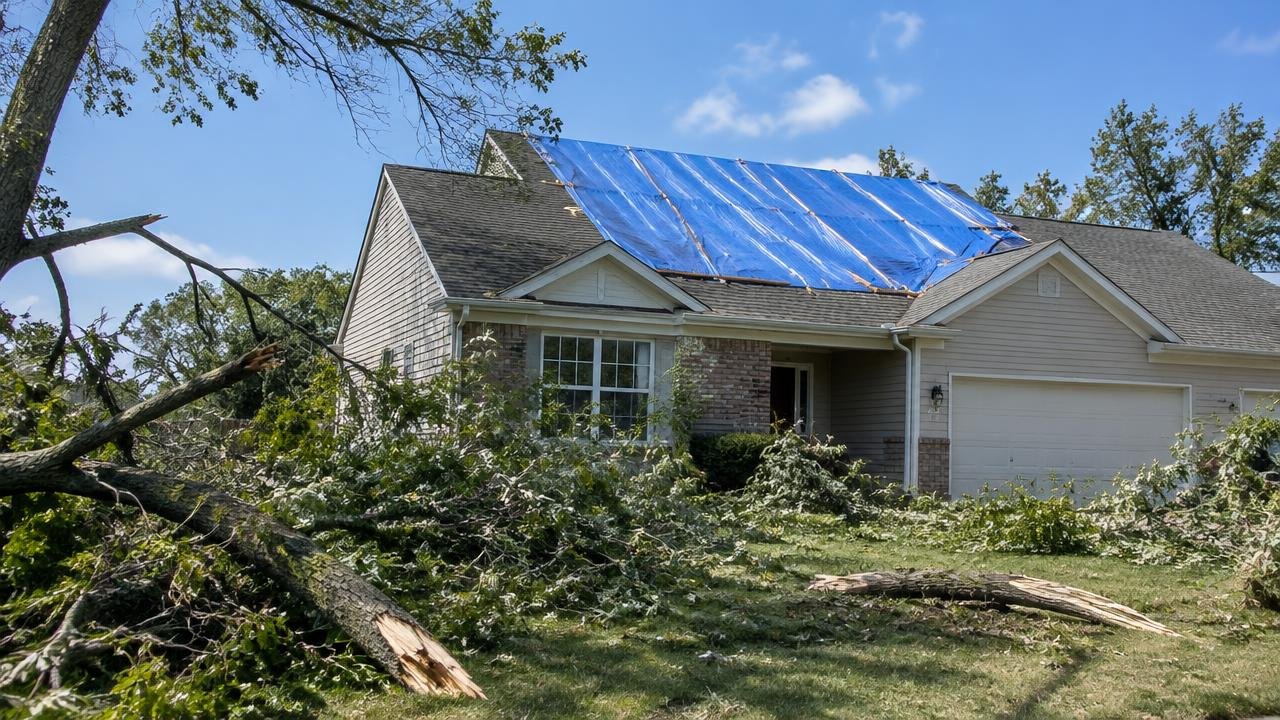
Severe weather in Central Indiana can strike suddenly, bringing severe thunderstorms, high winds, heavy hail, and falling tree limbs that quickly threaten your home's exterior. When a major front sweeps through Indianapolis or the surrounding counties, discovering missing shingles, interior ceiling leaks, or impact dents can feel overwhelming.
Knowing what to do immediately after severe weather hits protects your home from escalating secondary water damage, prevents safety hazards, and ensures a smooth insurance claims process. Taking the right initial steps helps you navigate emergency mitigation, secure professional inspections, and restore your roofing system effectively.
Step 1: Prioritize Personal Safety and Assess Visible Damage from the Ground
Your first priority once the storm passes is personal and family safety. Never climb onto a wet, storm-damaged roof. Wet shingles are extremely slippery, structural decking may be fractured or compromised by fallen branches, and unseen power lines could be resting against gutters or siding.
Perform an exterior walk-around from ground level using binoculars or your smartphone camera to zoom in on your rooflines. Look for obvious signs of distress such as displaced ridge caps, torn shingles, bent flashings, and dented gutters or downspouts. If you suspect hidden impact from ice stones, reviewing how to tell if your roof has hail damage can help you identify subtle collateral signs around your siding, air conditioning condenser, and window trim.
- Check for downed power lines or leaning trees near your roofline before walking your property perimeter.
- Scan for lifted, creased, curled, or completely missing shingles on the ground or in the yard.
- Inspect the ground around downspout openings for displaced shingle granules washed down during the storm.
Step 2: Mitigate Active Interior Leaks and Secure Your Living Space
If water enters your home, you have an obligation under standard insurance policies to take reasonable measures to mitigate further damage. Place buckets, plastic tubs, or garbage cans beneath active drips to catch water. If you notice a ceiling bulge where water is pooling behind the drywall or paint, carefully puncture the center of the blister with a screwdriver or nail to relieve the weight and direct the flow into a bucket.
Move furniture, electronics, and personal valuables away from damp zones, or cover them with plastic sheeting. In cases where sudden moisture appears, following the recommendations on what to do when your roof starts leaking ensures you protect subflooring, drywall, and structural framing while you coordinate emergency exterior assistance.
When structural penetration or widespread shingle loss leaves decking bare, contact a trusted contractor for emergency storm damage response. Professional crews can safely install heavy-duty tarps to prevent continuous rain infiltration before permanent repairs take place.
Step 3: Document All Damage Thoroughly for Your Records
Comprehensive documentation is the foundation of a successful insurance claim. Before cleaning up broken tree branches, moving fallen shingles, or discarding damaged home goods, take high-resolution photos and steady video footage from multiple perspectives.
Capture both wide shots showing overall storm impact and close-up images highlighting broken architectural shingles, split flashing, detached fascia, and dented gutters. Inside the home, photograph every water stain, dripping light fixture, damp insulation pocket, and damaged personal item. Maintain a dedicated digital folder with dates, timestamps, and written notes describing precisely when the storm hit and when the damage was detected.
Step 4: Schedule a Comprehensive Professional Roof Inspection
While your ground-level photos are crucial, insurance adjusters require detailed documentation of structural roof conditions that can only be evaluated up close. Scheduling specialized roof inspections with an experienced local contractor provides you with an objective, itemized assessment of your entire roofing system.
A seasoned professional examines delicate components that ground observers miss, including fractured shingle fiberglass mats, bruised underlayment, displaced vent caps, and compromised valleys. Having an expert contractor review your roof prior to the adjuster's visit ensures you have independent measurements and an accurate scope of work that aligns with local building codes in Central Indiana.
- Verification of shingle seal failure caused by wind gusts lifting tabs.
- Thermal or acoustic leak detection to track hidden moisture in decking and insulation.
- Inspection of perimeter metal, drip edge, chimney flashing, and vent collars for displacement.
Step 5: Contact Your Insurance Carrier and File the Claim
Once you have initial documentation and your professional inspection underway, notify your homeowners insurance provider promptly. Most policies include strict notification windows following severe storm events. Reviewing our guide on how to file a roof insurance claim will give you a clear roadmap of what to expect during adjuster meetings, scope comparisons, and payment disbursements.
Provide your claims specialist with the exact date of the storm, clear photo documentation, and details of any emergency tarping completed to safeguard the property. Request that your roofing contractor be present during the on-site insurance adjuster inspection so both professionals can review the roof slope by slope and agree on necessary repairs.
Step 6: Avoid 'Storm Chaser' Scams and Choose a Reliable Local Contractor
Major storms in Indianapolis and surrounding suburbs inevitably attract out-of-state roofing crews known as 'storm chasers.' These transient companies move into neighborhoods after severe weather, solicit aggressive door-to-door contracts, collect insurance checks, and subcontract the work with minimal oversight. When installation errors surface months down the road, those out-of-state contractors are nowhere to be found.
Protect your home by partnering strictly with an established local roofing company with permanent ties to the community. Whether your project calls for localized roof repair to patch missing tabs or a complete roof replacement to restore your home's exterior envelope, working with a verified local team guarantees lasting manufacturer warranties, code-compliant workmanship, and reliable follow-up support.
Restore Your Home with Trusted Central Indiana Storm Restoration
Dealing with storm damage is stressful, but taking prompt, methodical action safeguards your investment and returns your home to peak condition. At Central Indy Roofing, we specialize in helping homeowners and businesses across Indianapolis, Carmel, Fishers, Noblesville, Greenwood, and neighboring communities quickly recover from severe wind and hail storms.
Our factory-trained technicians handle everything from emergency tarping and thorough damage assessments to navigating claims alongside your insurance adjuster. Don't wait for minor leaks to turn into costly structural rot. Contact Central Indy Roofing today at 317-836-2455 to schedule your free roof inspection and get a detailed, honest estimate for your storm repairs.
Frequently Asked Questions
- Should I call my insurance company or a roofing contractor first?
- It is generally best to contact a trusted local roofing contractor first for a thorough inspection. If your roof has only minor issues below your deductible threshold, filing an unnecessary claim could negatively impact your claims history. If significant damage is verified, your contractor's photographic report will strengthen your insurance claim from day one.
- How long do I have to file a roof storm damage claim in Indiana?
- Most homeowner insurance policies in Indiana require claims to be submitted within one year of the weather event, though some policies allow up to two years. However, you should file as quickly as possible, as delaying can lead to progressive moisture damage that insurance adjusters may dispute as homeowner neglect.
- Will insurance cover emergency roof tarping after a storm?
- Yes. Most standard homeowners policies cover reasonable emergency mitigation costs, such as temporary tarping and water extraction, under the policy's mitigation clause. Always save receipts and invoices from your contractor to submit for reimbursement alongside your primary repair claim.
- How do I know if my roof needs repair or a complete replacement after a storm?
- If damage is isolated to a few missing shingles or bent flashing on a single slope, a targeted repair is often sufficient. However, if wind has broken the adhesive seals across multiple roof planes, or if hail has widespread impact bruises across the fiberglass shingle mat, insurance typically approves a full roof replacement to maintain structural integrity.