
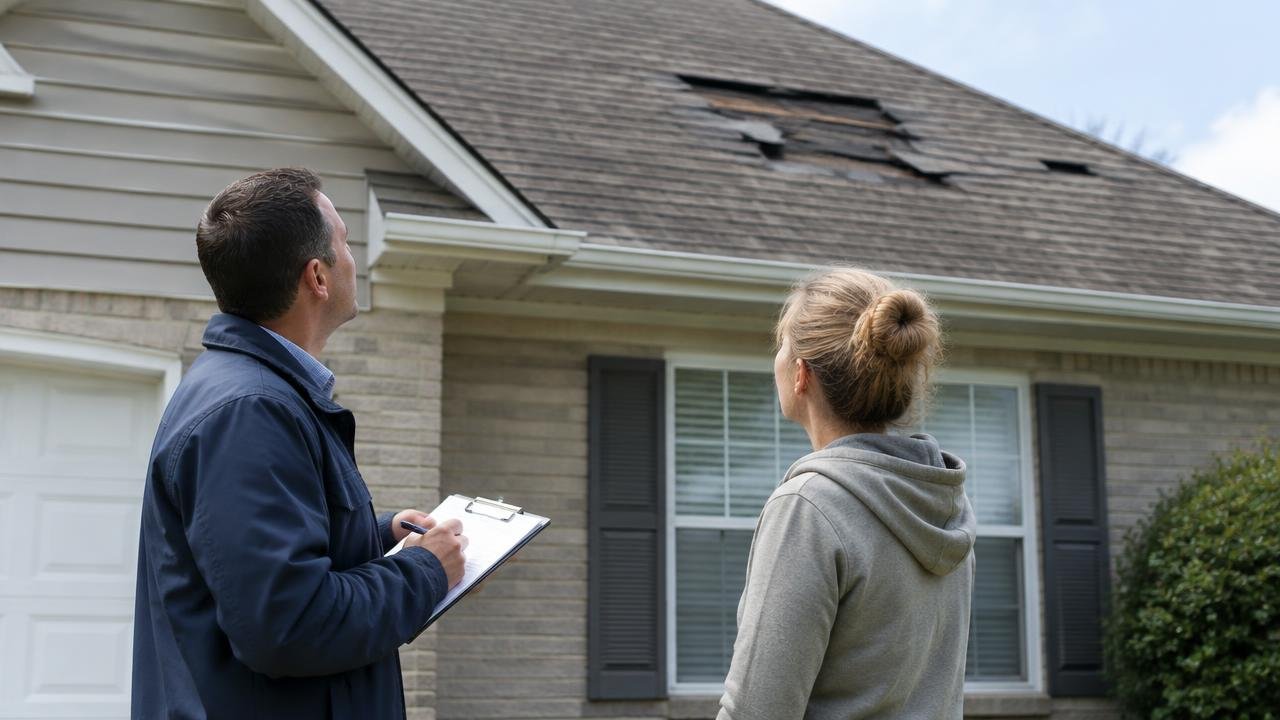
Severe weather is an inescapable part of living in Central Indiana. Between spring supercells carrying golf-ball-sized hail, humid summer thunderstorms packing 60-mile-per-hour straight-line winds, and harsh winter freeze-thaw cycles, residential roofs in our area absorb relentless abuse year after year. When severe weather strikes your neighborhood, you may find yourself wondering whether your homeowners insurance will foot the bill for a total roof replacement or if you will be left paying out of pocket.
The short answer is yes, homeowners insurance frequently covers roof replacements in Indiana, but coverage depends entirely on what caused the damage, the specific language of your insurance policy, and the age and condition of your roof at the time the damage occurred. Standard policies are designed to protect you against sudden, catastrophic events rather than ordinary wear and tear or neglected home maintenance.
Understanding the nuances of your insurance policy before filing a claim can make the difference between a fully approved replacement and an unexpected denial. In this comprehensive guide, we will break down what insurance covers, how different policy types handle payouts, why matching laws and discontinued shingles matter, and how you can position your claim for success.
Covered Perils vs. Excluded Damage: What Indiana Policies Include
Most Indiana homeowners carry an HO-3 special form policy, which provides 'open perils' coverage for the exterior structure of your home. This means damage to your roof is covered unless the specific cause of the damage is explicitly excluded in the fine print of your policy contract. The primary trigger for a valid insurance replacement is sudden, accidental physical loss caused by an act of nature.
If a severe thunderstorm rolls across Marion, Hamilton, or Hendricks County and tears off three dozen shingles, or if an intense hail storm bruises and fractures the fiberglass matting beneath your asphalt shingles, your policy should respond. Similarly, if a heavy windstorm snaps an oak limb that crashes through your roof deck, both the structural repair and the subsequent water damage are generally covered perils. Knowing how to tell if your roof has hail damage is often the first step in determining whether a legitimate claim exists.
- Covered: Hail impacts that fracture shingle mats or dislodge protective granules
- Covered: High winds that lift, crease, or tear shingles from the roof decking
- Covered: Falling tree limbs and windborne debris that puncture the roof surface
- Covered: Weight of ice, sleet, or heavy snow causing structural collapse
- Excluded: Normal age, gradual granule loss, and natural weathering over decades
- Excluded: Rot, mold, or leaks stemming from neglected routine maintenance
- Excluded: Damage caused by rodents, birds, raccoons, or insect infestations
- Excluded: Cosmetic-only damage if your policy carries a cosmetic storm waiver
Replacement Cost Value (RCV) vs. Actual Cash Value (ACV)
When dealing with insurance payouts, the single most critical detail in your policy declarations page is whether your roof is covered under Replacement Cost Value (RCV) or Actual Cash Value (ACV). This distinction determines how much money you receive from the insurance company when it is time to install a brand-new roof.
Under an RCV policy, the insurer covers the current cost to replace your roof with brand-new materials of comparable quality, minus your deductible. The insurer initially pays out the depreciated value (the actual cash value), and once the work is completed and invoiced by your contractor, they release the remaining 'recoverable depreciation.' Under an ACV policy, however, the insurer subtracts depreciation based on the age of your roof and keeps that money; you receive only the depreciated market value of the old roof, leaving you to cover the rest of the bill out of pocket.
In recent years, many national insurance carriers operating in Indiana have started automatically converting roofs older than 10 to 15 years from RCV to ACV endorsements. Reviewing your policy schedule annually ensures you are not caught off guard by an ACV clause when you need a complete roof replacement.
When Will an Insurer Pay for Full Replacement Instead of a Repair?
Insurance adjusters naturally prefer to minimize claim payouts. If only one slope or a handful of shingles sustained damage during a storm, their initial estimate may cover only localized spot repairs. However, several factors under Indiana building practices and insurance standards can turn a minor repair estimate into a full roof replacement claim.
One major factor is shingle availability. Asphalt shingle manufacturers frequently discontinue product lines, alter shingle dimensions, or change locking tab designs. If the damaged shingles on your roof are no longer produced, a contractor cannot perform a proper, warrantable repair. Performing a brittle test or submitting a sample to an independent testing service like ITEL can prove that surrounding shingles will crack when lifted, making a spot repair impossible. When deciding whether you should repair or replace your roof, mechanical unfeasibility and shingle matching play massive roles in convincing an insurance company to replace the entire system.
- Discontinued shingles: If replacement shingles cannot be sourced to fit the existing exposure and dimensions, partial repair cannot be executed properly.
- Brittleness of surrounding shingles: If aging shingles break or crease when an installer lifts them to slide in new units, the roof is unrepairable.
- Uniform appearance standards: Many policies and state guidelines require a reasonably uniform appearance, meaning a checkerboard patch on a prominent front elevation is unacceptable.
- Extent of damage: If storm damage affects more than 25% to 30% of a roof facet or spans across multiple slopes, adjusters typically authorize a full replacement.
Step-by-Step Guide to Getting Your Roof Claim Approved
Filing an insurance claim without proper preparation often leads to delays, lowball estimates, or outright denials. The process should begin long before you dial your insurance carrier's claim hotline. Understanding the exact timeline of how to file a roof insurance claim gives you the upper hand when dealing with adjusters.
Start by scheduling a thorough, non-invasive assessment with a qualified local roofing contractor immediately following any severe storm event. Your contractor will climb onto the roof, inspect soft metals (like box vents, gutters, and flashing) for hail dents, photograph damaged shingles, and inspect the attic space for moisture intrusion. If sufficient storm-related damage is verified, you can proceed to contact your insurance agent to initiate the claim.
When the insurance adjuster visits your property, arrange for your roofing contractor to be present on-site. Roofers speak the adjuster's technical language and can walk the slopes side by side with the adjuster, pointing out collateral damage, chalking hail hits, and discussing necessary line items such as ice and water shield code requirements that might otherwise be overlooked.
Why Indiana Roof Insurance Claims Get Denied
Not every roof insurance claim ends with a check in the mail. Homeowners across the Indianapolis metro area are often shocked to receive denial letters after filing claims they assumed were open-and-shut cases. Understanding why claims get rejected helps you avoid common pitfalls.
The most frequent reason for claim denial is the presence of existing wear and tear rather than identifiable storm damage. If an adjuster inspects your roof and determines that shingles are simply curling from age, losing granules due to normal sunlight exposure, or blistering from excessive heat buildup caused by inadequate attic ventilation, the claim will be dismissed as a maintenance issue.
Another common problem is missed filing deadlines. Most insurance contracts require policyholders to report storm damage within 12 months (or occasionally up to 24 months) from the official date of loss. If you wait until a roof leak manifests a year and a half after a hailstorm, the insurer may argue that the damage occurred outside the allowable reporting window. Routine roof inspections twice a year ensure that storm damage is identified and documented well before deadlines expire.
- Attributing age-related deterioration or manufacturer blistering to recent storm events
- Missing your policy's contractual deadline for reporting storm-related damage
- Filing a claim for cosmetic damage when a cosmetic storm exclusion endorsement is active on your policy
- Inadequate documentation showing the specific date of loss and weather data
- Attempting to perform DIY repairs that alter or obscure the physical evidence of the storm
Navigating Your Claim with Central Indy Roofing
Navigating an insurance claim while dealing with leaks, missing shingles, and confusing policy paperwork can feel overwhelming. Having a dedicated, experienced local partner makes the entire process seamless from initial damage discovery through the final installation.
Central Indy Roofing works directly alongside Central Indiana property owners and insurance carriers to ensure accurate, comprehensive claim assessments. We document every inch of storm damage, compile high-resolution photo reports, and provide detailed estimates formatted to industry-standard estimating platforms like Xactimate so your adjuster receives the exact specifications required to authorize full replacement scope.
Do not let hidden storm damage jeopardize your home's structural integrity or leave you paying for repairs that your insurance policy was designed to cover. Contact Central Indy Roofing today at 317-836-2455 to schedule your comprehensive free roof inspection and free estimate.
Frequently Asked Questions
- How much will my insurance company pay toward a new roof?
- If you have a Replacement Cost Value (RCV) policy, the insurance company will pay the full cost to replace your damaged roof with new materials of like kind and quality, minus your deductible. If you have an Actual Cash Value (ACV) policy, the insurer will pay only the depreciated value of your existing roof, meaning you must cover both your deductible and the accumulated depreciation out of pocket.
- Will filing a roof insurance claim cause my premiums to increase in Indiana?
- Homeowners insurance rates in Indiana are generally set on a geographic and risk-pool basis rather than individual fault. Because weather events like hail and high winds are classified as 'acts of nature' or 'acts of God,' insurance companies cannot usually raise your rates solely because you filed an individual weather-related claim. However, if a severe storm causes widespread damage across an entire ZIP code or county, the carrier may adjust baseline rates across the entire region upon renewal.
- Can a roofing contractor pay or waive my insurance deductible in Indiana?
- No. Under Indiana law (specifically IC 27-1-15.6 and related consumer protection statutes), it is illegal for a roofing contractor to pay, waive, rebate, or absorb any portion of a homeowner's insurance deductible. Any roofer offering to 'waive your deductible' or provide a kickback is asking you to participate in insurance fraud. Homeowners are legally required to pay their stated policy deductible directly.
- How long do I have to file a roof insurance claim after a storm in Indianapolis?
- Most standard homeowners insurance policies in Indiana give policyholders either 365 days (one year) or up to 24 months from the official date of loss to file a claim and complete the roof replacement. It is critical to check your specific policy declarations or consult your agent, as waiting too long can result in a claim denial due to failure to report in a timely manner.