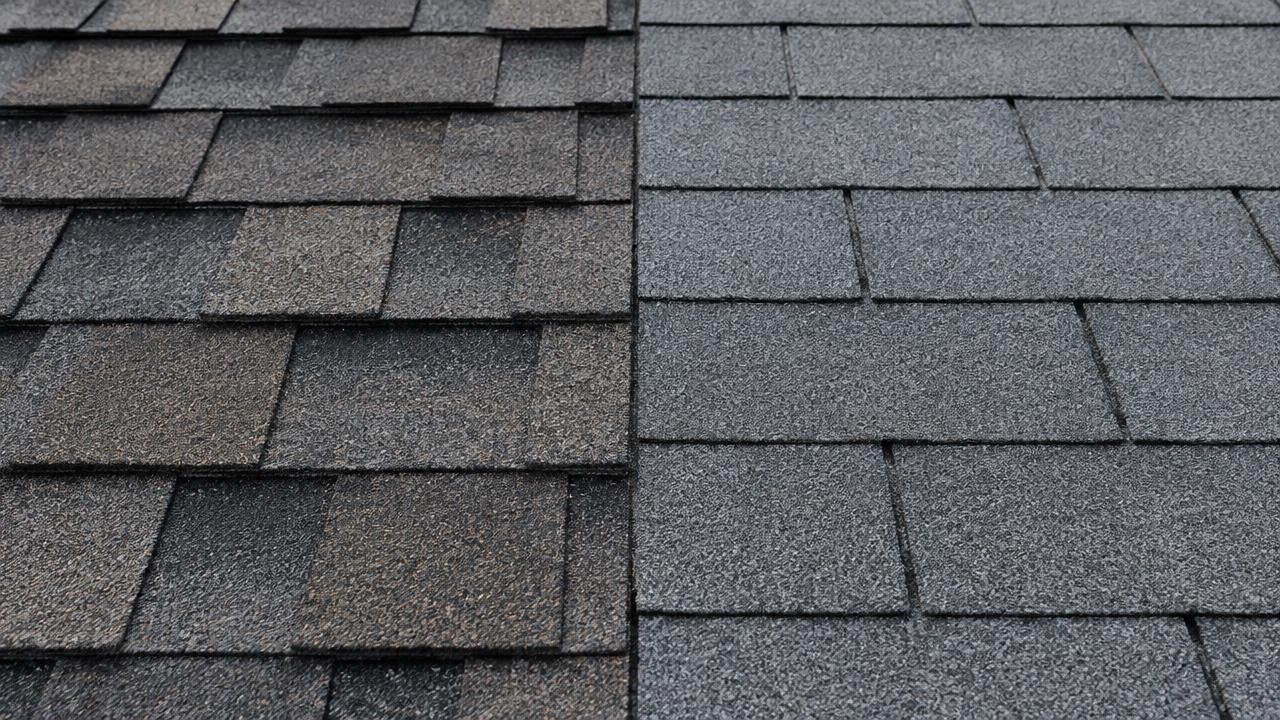
When planning a shingle roof, homeowners often compare architectural shingles with traditional 3-tab products. Both are asphalt shingles, but they differ in profile, construction, product availability, and the specifications offered by each manufacturer. Architectural shingles have a more dimensional appearance; 3-tab shingles have a flatter, repetitive pattern. Those broad descriptions do not replace reviewing the actual product line and installation requirements.
There is no universal winner. Budget, appearance, roof condition, wind exposure, product ratings, and the rest of the roofing system matter. A roof’s performance also relies on underlayment, flashing, ventilation, and workmanship. This guide helps you compare the two categories and ask more useful questions. Learn about asphalt shingle roofing and arrange a roof inspection before selecting materials.
1. How the two shingle styles look
Traditional 3-tab shingles are made with regularly spaced cutouts that create the familiar repeated pattern across a roof. Their comparatively flat profile gives a clean, uniform look. Architectural shingles use laminated layers that create a more textured appearance, often with varied shadow lines. Color blends and profiles vary widely, so samples viewed outdoors can look different from online images or indoor displays.
Appearance should be considered in relation to the home’s architecture, siding, brick, trim, and neighborhood context. Ask to see full-size product samples and, if available, examples installed on similar roof shapes. Consider how the color will look in direct sunlight and shade. A dimensional profile can emphasize roof planes, while a simpler shingle may suit a more understated design. Neither style guarantees greater curb appeal; that is a matter of preference and fit.
2. Construction and product specifications
Architectural shingles typically use laminated layers, while 3-tab shingles generally have a single-layer appearance with cutouts. The exact construction, weight, composition, and performance ratings vary by manufacturer and product tier. It is inaccurate to assume that every architectural shingle has the same wind resistance, impact rating, or warranty. Product documentation lists the conditions under which a rating applies, including installation details and required accessories.
Ask for the manufacturer, product name, line, color, and written specifications in the estimate. Confirm whether starter shingles, ridge caps, underlayment, and ventilation components are included and compatible. The complete installed assembly matters more than a category label. If hail resistance is important, ask specifically about tested classifications and what they do and do not mean; see whether impact-resistant shingles are worth it.
3. Cost, availability, and value
Architectural shingles often cost more than basic 3-tab options, but the difference depends on product line, roof size, labor, tear-off, access, and project details. Local availability also changes. Any comparison should use complete written estimates with equivalent scope, including disposal, underlayment, flashing, ventilation, and repairs to damaged decking. A low material price does not necessarily translate to lower total project cost if the scope excludes important components.
Think about value as the balance of appearance, documented performance, expected maintenance, and ownership plans—not just the initial estimate. Ask how long the quoted product is expected to remain available for future repairs and what a matching repair may look like as the roof weathers. No contractor should represent a manufacturer’s limited warranty as a guaranteed lifespan. Read warranty terms, exclusions, and installation requirements carefully before choosing.
4. Wind and weather performance
Wind performance is specific to the product and its installation. Shingle design, fastening pattern, roof edge details, roof geometry, and exposure influence how the roof behaves during strong winds. Some architectural product lines may offer higher listed wind ratings than entry-level alternatives, but the name “architectural” does not itself establish a rating. Check the product’s actual testing and required installation method.
Indiana weather also includes hail, heavy rain, snow, temperature changes, and freeze-thaw conditions. Neither shingle category is immune to damage. Good flashing and drainage details help manage water, while proper attic insulation and ventilation address separate moisture and temperature concerns. Ask the contractor how the selected system fits your specific roof and what maintenance or inspection is appropriate after a significant storm.
- Compare documented wind ratings for the exact product.
- Confirm required nailing zones and installation accessories.
- Review roof-edge, ridge, valley, and flashing details.
- Do not treat a style name as a guarantee against storm damage.
5. Repairability and roof appearance over time
Both shingle types can sometimes be repaired, but a successful match depends on the original product, color, age, and availability. New shingles may look noticeably different beside weathered materials even when the model is similar. A repair also needs to address the reason for damage, such as lifted shingles, failed flashing, or a storm impact. Installing a replacement tab without assessing surrounding conditions may not solve a recurring issue.
If the roof is older or damage is widespread, compare the cost and practicality of repeated repairs with a full replacement. An inspection can assess whether shingles remain serviceable and whether decking or underlayment issues are present. For signs that a broader project may be needed, read signs you need a new roof and repair or replace your roof.
6. Making the right choice for your Indianapolis home
Start with the roof’s condition, slope, ventilation, and current layers. Then set a realistic project budget and compare specific products that meet the building’s needs. Ask for an itemized proposal that identifies removal, underlayment, flashing, starter and ridge materials, ventilation work, cleanup, and how hidden damage will be priced. A professional should explain differences without suggesting that one option eliminates maintenance or storm risk.
Also confirm contractor insurance, written contract terms, payment expectations, schedule, disposal, and how changes will be approved. If you are choosing between two estimates, compare what is actually being installed rather than relying on verbal descriptions. Central Indy Roofing can evaluate your roof and discuss options through a free roof inspection. Call 317-836-2455 to arrange an inspection or estimate.
Frequently Asked Questions
- Are architectural shingles stronger than 3-tab shingles?
- Some architectural products have different construction and higher listed ratings than some basic 3-tab options, but performance varies by product. Compare manufacturer specifications and installation requirements.
- Are 3-tab shingles still available?
- Availability varies by manufacturer and market. Ask a local contractor which products are currently offered and whether a specific style is appropriate for your roof.
- Can I install architectural shingles over existing 3-tab shingles?
- Whether an overlay is allowed and appropriate depends on existing layers, roof condition, local requirements, and manufacturer instructions. A professional should inspect the roof and explain tear-off versus overlay considerations.
- Which shingle is more affordable?
- Basic 3-tab products may have a lower material cost, but total pricing depends on the whole project. Compare itemized estimates and equivalent system components rather than material cost alone.