
Your roof is the first line of defense protecting your home, family, and belongings from harsh weather. In Central Indiana, residential roofing systems must endure intense seasonal shifts, ranging from sub-zero winter temperatures and heavy snow to humid summer heat waves and violent spring thunderstorms. Over time, these conditions take a heavy toll on even high-quality roofing materials.
Because roofs sit high above eye level, subtle problems often go unnoticed until water starts dripping through your ceiling or running down your interior walls. Recognizing the early warning signs that your roofing system is failing allows you to plan ahead, prevent catastrophic water damage, and protect your home's structural framing.
Whether your roof has weathered decades of normal wear or suffered recent hail and wind damage, this guide breaks down the most reliable physical indicators that indicate it is time to schedule a complete replacement rather than a temporary patch.
The Age of Your Current Roofing System
One of the most dependable indicators that you need a new roof is simple chronological age. Standard asphalt shingle roofs typically have an expected service lifespan of 20 to 25 years under ideal conditions. However, local climate conditions dictate how long a roof lasts in Indiana, and intense UV radiation, heavy winter ice dams, and severe wind often shorten that timeline to 15 to 20 years.
If your roof was installed over an existing layer of shingles (a practice known as an overlay or re-roof), its lifespan is substantially shorter. Trapped heat and uneven deck surfaces cause multi-layered roofing systems to degrade much faster. If your roof is approaching or has passed the two-decade mark, having it evaluated for a planned roof replacement prevents unexpected emergency failures during the next major Indiana storm.
- Standard three-tab asphalt shingles: typically last 15 to 20 years in Central Indiana.
- Architectural or dimensional shingles: typically provide 20 to 28 years of reliable protection.
- Roofs with an underlying second layer: often deteriorate after just 12 to 15 years due to trapped heat and moisture.
- Neighboring homes built at the same time getting replacements: a reliable neighborhood benchmark that your materials are nearing end-of-life.
Shingles That Are Curling, Cupping, or Clawing
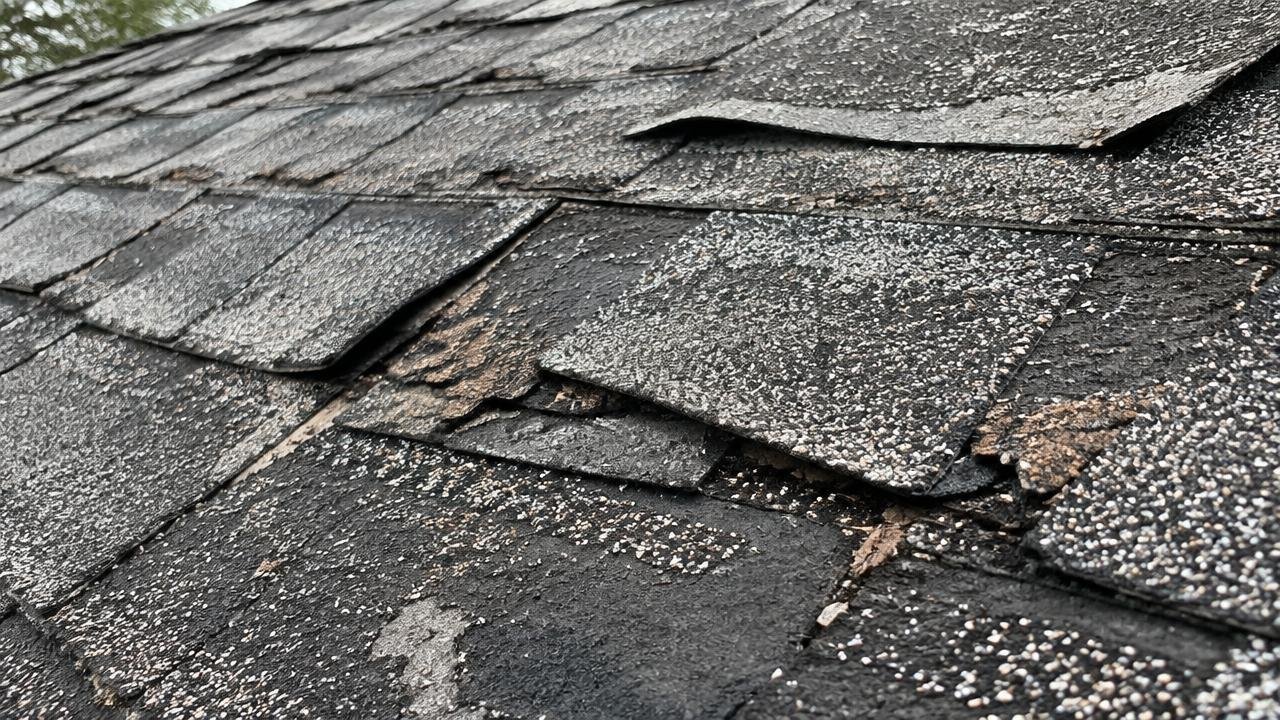
As asphalt shingles age, the volatile petrochemical oils that keep them flexible gradually dry out under persistent sunlight. When this happens, shingles become rigid and brittle, causing their edges to warp upward (curling) or their centers to bow upward while the edges stay flat (cupping). In advanced stages, shingles may curl inward in a claw-like shape.
Curled and cupped shingles present a serious threat to your home. Once shingles lose their flat seal against the roof deck, wind easily catches under the edges, snapping off shingle tabs and exposing the underlying water-resistant underlayment. Furthermore, wind-driven rain can blow directly beneath lifted shingles, causing hidden rot in the roof sheathing long before an indoor leak appears.
- Cupping: edges remain flat while the central portion of the shingle bulges upward.
- Curling: edges turn upward, exposing the adhesive strip and lower shingle layers.
- Brittleness: pieces snap off easily if lightly bent during an evaluation.
- Loss of wind resistance: unsealed tabs lift freely in light to moderate breezes.
Excessive Granule Loss and Bald Shingles
Asphalt shingles are coated with ceramic-clad mineral granules that perform two vital tasks: they protect the fragile asphalt core from damaging UV sunlight, and they provide Class A fire resistance. In the early weeks after a new installation, seeing a few stray granules in your downspouts is normal. However, finding significant accumulations of dark, sand-like granules in your gutters years into your roof's lifespan is a clear warning sign of structural deterioration.
As shingles shed their protective granules, the underlying black asphalt layer is exposed directly to sunlight and oxygen. This accelerates drying, cracking, and water absorption. When you inspect your roof from the ground, look for dark patches, shiny fiberglass threads, or an inconsistent color pattern across your roof slopes. Widespread bald spots indicate the protective surface has reached total depletion.
Damaged, Cracked, or Missing Shingles Across Multiple Slopes
Isolated missing shingles after a strong thunderstorm can often be repaired if the surrounding roof remains healthy and pliable. However, if you notice widespread cracking, creased tabs, or shingles tearing away across multiple sections of your roof, localized patching is rarely cost-effective. Comparing whether to repair or replace your roof comes down to whether the failure is localized or systematic.
When shingles crack in various directions, it signifies that the asphalt membrane has completely lost its elasticity. If an aging roof is repaired with a few new shingles, the surrounding brittle shingles will often crack during the repair process itself, creating new leak points. If severe wind has removed patches of shingles on several roof faces, the original adhesive seal across the entire home is likely failing.
- Horizontal creases along shingle tabs: indicates wind has repeatedly lifted and broken the tab seal.
- Thermal cracking: random vertical or zigzag splits caused by constant expansion and contraction.
- Missing patches: sections of bare underlayment or exposed plywood exposed to open air.
- Mismatched repairs: repeated spot patches that leave the roof looking patchy and vulnerable.
Sagging Roof Decking and Structural Inconsistencies
A healthy roof should display clean, straight, rigid lines along its ridges, valleys, and planes. If you step back across the street and notice dips, swoops, depressions, or sagging areas along the roofline, you are dealing with a critical structural issue that requires immediate attention.
Sagging typically indicates that moisture has penetrated the shingles and underlayment, soaking the wooden roof decking (plywood or OSB) or rotting the rafters beneath it. Over time, saturated wood loses its load-bearing strength and bows under the weight of the roofing materials and winter snow accumulation. A sagging roof deck cannot be fixed with a simple shingle replacement; it requires stripping down to the framing, replacing rotted lumber, and restoring structural integrity before applying new materials.
Attic Leaks, Stains, and Water Intrusion Inside the Home
Often, the most definitive proof that you need a new roof comes from inside your attic rather than outside on the shingles. You do not need to wait for water to pool on your living room floor to inspect for water intrusion. Taking a flashlight into your attic on a bright, sunny afternoon or during a steady rain can reveal hidden failures.
Look for beams of daylight penetrating through the roof boards near valleys, chimneys, and vents. Check the underside of the roof decking for dark water stains, white powdery efflorescence, or soft, rotted wood. If moisture penetrates through the attic insulation, it creates an ideal breeding ground for hazardous mold and drives up your heating and cooling costs. If you suspect hidden moisture entry points, professional leak detection can trace water paths back to deteriorated flashing or failed underlayment.
What to Do If You Notice These Warning Signs
If your roof displays one or more of these symptoms, taking quick action saves you thousands of dollars in secondary structural repairs, insulation replacement, and drywall restoration. Ignoring aging shingles allows moisture to quietly rot the structural decking and interior framing of your home.
The best first step is to schedule an objective, thorough evaluation by an experienced local roofing professional. Comprehensive roof inspections clarify the precise condition of your decking, flashing, shingles, and ventilation system, giving you the facts needed to decide between ongoing maintenance or a full roof replacement.
At Central Indy Roofing, we help homeowners across the greater Indianapolis metropolitan area navigate roofing decisions with complete transparency. We offer a free roof inspection and detailed estimate so you can make confident, informed choices about protecting your property. Call our friendly local team today at 317-836-2455 to schedule your complimentary inspection.
Frequently Asked Questions
- How can I tell if my roof has hail damage or is just old?
- Hail damage typically leaves distinct, random round indentations or dark bruises where granules were knocked loose by direct impact, often accompanied by dented metal gutters, downspouts, and vent caps. Age-related wear, by contrast, shows up as uniform curling, horizontal wind creases, overall granule loss, and brittle, cracked shingles across entire sun-exposed slopes.
- Can I replace just one side of my roof if only that slope is damaged?
- While physically possible, replacing only one slope is rarely recommended. Partial replacements create visible color mismatches, leave older underlayment and flashing ties between valleys, and result in two different warranty timelines. Unless the undamaged slopes are relatively new, replacing the entire system is more cost-effective over the long run.
- Will my homeowners insurance pay for a new roof if it is worn out?
- Homeowners insurance covers sudden, accidental damage caused by covered perils like wind, hail, or falling trees, but it does not cover normal wear and tear, deferred maintenance, or aging materials. If severe weather damages an older roof, insurance may cover replacement or repair costs minus depreciation, depending on whether your policy has replacement cost value (RCV) or actual cash value (ACV).
- How long does a typical roof replacement take once work begins?
- For most standard residential homes in Central Indiana, a professional roofing crew can complete a tear-off and replacement in one to two days, weather permitting. Larger homes with steep pitches, complex rooflines, or significant rotted decking may take three or more days.