
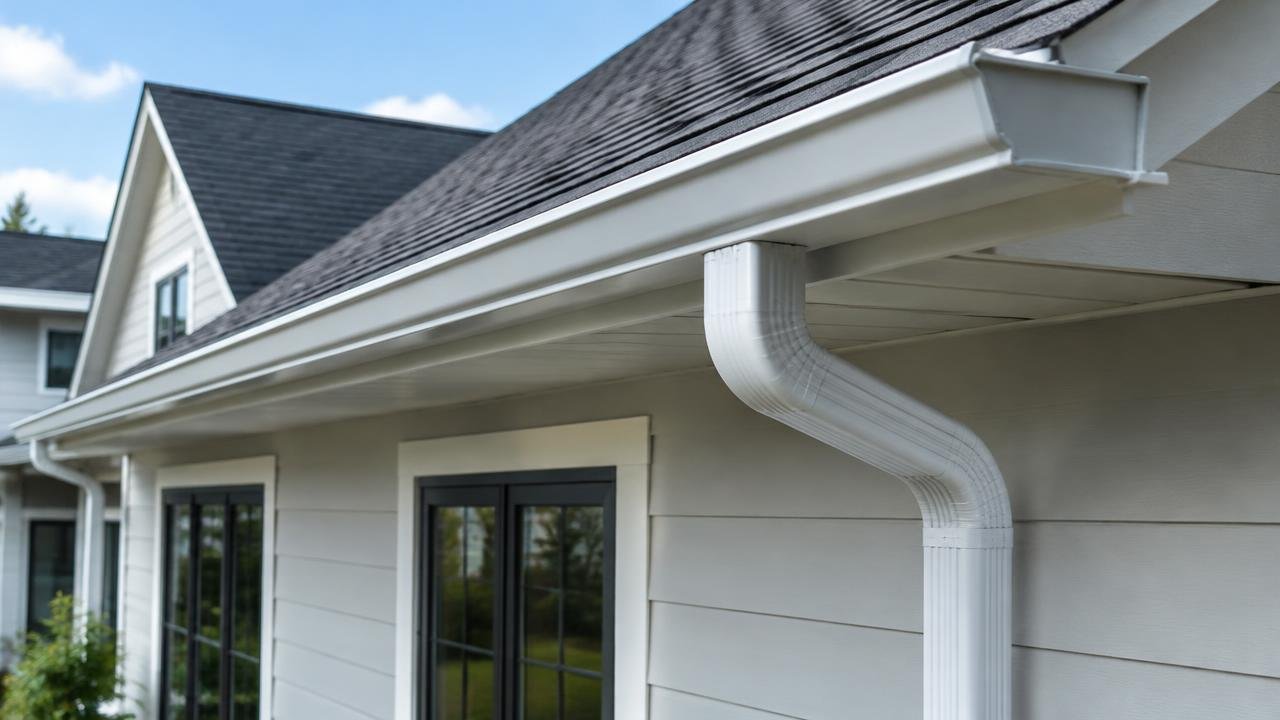
When updating your home's exterior water management system, choosing the right type of gutter is just as vital as choosing the right shingles. Gutters protect your roof decking, fascia boards, siding, landscaping, and foundation from serious water intrusion. If runoff from heavy rainfall is not channeled away properly, you face expensive problems like basement flooding, rotted soffits, and cracked foundation walls.
The two primary options available to homeowners are sectional gutters and seamless gutters. While sectional systems have traditionally been popular among do-it-yourself enthusiasts because of their readily available retail components, seamless gutters have become the modern standard for residential durability and leak prevention. Central Indiana experiences freezing winters, frequent spring downpours, and severe summer storms, making your gutter choice critical to long-term home health.
In this comprehensive guide, we compare seamless vs. sectional gutters across durability, installation complexity, maintenance requirements, aesthetic appeal, and overall cost to help you decide which water management solution is right for your property.
Understanding the Fundamental Differences
To make an informed decision, it is essential to understand how each system is manufactured and constructed. Sectional gutters, often referred to as traditional or modular gutters, come in pre-cut factory lengths—typically 10 to 20 feet long. These individual pieces are joined together along your roofline using connectors, corner miters, end caps, and heavy applications of silicone or gutter sealant.
In contrast, seamless gutters are custom-fabricated on-site using a specialized continuous roll-forming machine mounted in a service truck or trailer. A technician measures your home's eaves precisely and extrudes single, continuous lengths of aluminum or copper tailored to each run of your roof. The only joints in a seamless gutter installation occur at the corners and where downspouts attach.
Durability and Leak Resistance in Indiana Weather
In the battle between seamless and sectional designs, leak resistance is where seamless gutters hold their most decisive advantage. Every joint in a sectional gutter system represents an inherent point of vulnerability. Over time, seasonal thermal expansion and contraction—which is pronounced during harsh Indiana temperature swings—causes sealant to dry out, crack, and fail.
When joints pull apart, standing water trickles down the exterior wall or pools directly next to your home's foundation. During freezing winter weather, trapped water turns to ice, expanding inside joints and accelerating seam separation. If you want to learn more about winter ice buildup risks, read our guide on how to prevent ice dams. Seamless gutters have no seams along straight runs, eliminating the primary cause of gutter failure and drastically reducing the risk of water damage behind the fascia.
- Seamless systems eliminate dozens of potential leak points across straight roof runs.
- Sectional seams tend to weaken after 3 to 5 years of freeze-thaw cycles.
- Fewer seams mean fewer internal ridges to catch pine needles, twigs, and leaf debris.
- Continuous metal profiles withstand heavier snow loads and torrential summer rain.
Maintenance, Clogging, and Cleaning Requirements
Routine maintenance is unavoidable with any gutter system, but the design of your gutters determines how often you need to clean them and how frustrating that task will be. Sectional gutters rely on overlapping joints, connecting brackets, and internal sealant beads. These internal ridges create tiny dams inside the gutter channel where organic matter easily snags.
As leaves, seed pods, and dirt accumulate against these ridges, stubborn clogs form quickly. Stagnant water backed up in the trough adds excess weight, which can pull gutter fasteners away from the fascia and cause wood rot. A clogged gutter can also push rainwater underneath your lower shingles, requiring premature roof repair to fix deteriorated decking.
Because seamless gutters feature smooth, unobstructed channels along the entire span of your roofline, water and small debris flow freely toward the downspouts. While you still need to clear seasonal debris—especially if you have mature shade trees—seamless systems clog far less frequently and clean out much faster with a hose or scoop.
Curb Appeal and Aesthetic Value
Gutters are a prominent architectural feature along your home's roof edge. Sectional gutters have visible seams, external joining brackets, and noticeable overlap points every 10 to 20 feet. Over time, these connection points can sag or discolor differently than the main troughs, creating an uneven, pieced-together look that detracts from your home's exterior appeal.
Seamless systems offer a clean, uninterrupted profile that integrates smoothly with your fascia and roofline. They are typically finished with baked-on enamel coatings available in dozens of colors designed to match your siding, trim, or shingles. When paired with a professional roof replacement, high-quality seamless gutters significantly elevate your property's overall curb appeal and resale value.
Cost Comparison: Upfront Expense vs. Long-Term Value
Upfront cost is typically the primary reason homeowners consider sectional gutters. Sectional components made of vinyl or lightweight aluminum can be purchased at any home improvement store for a low initial materials cost. Homeowners with DIY skills and ladder safety experience can install them over a weekend, eliminating professional labor expenses.
However, looking strictly at initial price tags can be deceptive. Sectional gutters usually last only 10 to 15 years before the joints repeatedly fail, requiring frequent re-caulking, bracket replacements, and eventual re-installation. Seamless gutters require professional gutter installation due to the heavy equipment needed to extrude the metal on-site, resulting in a higher upfront investment.
Over a typical 20- to 30-year span, seamless gutters consistently prove to be the more economical investment. By avoiding repeated sealant purchases, structural water damage repairs, and early replacement cycles, seamless gutters offer an outstanding return on investment for Central Indiana property owners.
- Sectional initial cost: Lower materials cost; DIY-friendly if labor is not factored in.
- Seamless initial cost: Moderate professional installation cost covering custom extrusion and heavy-gauge aluminum.
- Lifespan: Sectional systems typically last 10–15 years; seamless systems routinely last 20–30+ years with standard care.
- Maintenance expenses: Sectional requires frequent resealing; seamless requires only seasonal debris cleaning.
Which System Should You Choose?
Choosing between seamless and sectional gutters ultimately depends on your budget, your long-term plans for the property, and who is handling the installation. If you are handy, working with a tight budget on a small detached garage or shed, and do not mind regular maintenance, sectional gutters can provide an adequate short-term solution.
For your primary residence or any commercial property, seamless gutters are almost always the superior choice. The superior strength, clean appearance, reduced maintenance, and exceptional leak resistance easily justify the modest difference in upfront cost. When updating your gutters alongside residential roofing, seamless installation ensures your entire roofline water management system works as a cohesive unit.
If you are unsure whether your current gutters are functioning properly, schedule a free roof inspection with Central Indy Roofing. Our local experts will evaluate your gutters, fascia, and roofline to help you find the most durable, cost-effective water runoff system. Call our team today at 317-836-2455 to discuss your project.
Frequently Asked Questions
- Can I install seamless gutters myself?
- No, seamless gutters cannot be installed as a do-it-yourself project because they require a commercial roll-forming machine that extrudes custom metal troughs on-site from large coils. Proper pitching and hidden hanger placement also require professional expertise.
- How long do seamless gutters last compared to sectional gutters?
- Seamless aluminum gutters typically last 20 to 30 years or more with basic maintenance, whereas sectional gutters often begin leaking at the seams within 5 to 10 years and usually need replacement after 10 to 15 years.
- Do seamless gutters ever leak?
- Seamless gutters have no seams along straight runs, so leaks along the eaves are virtually eliminated. The only places a seamless gutter can leak are at the corner miters and downspout connections, but these joints are sealed with commercial-grade fasteners and sealants that outlast traditional retail products.
- Should I replace my gutters when I replace my roof?
- While not strictly required, replacing your gutters alongside a roof replacement is highly recommended. It allows contractors to inspect and repair rotted fascia boards, ensure proper drip edge alignment, and install a perfectly matched water management system without disturbing new roofing materials later.