
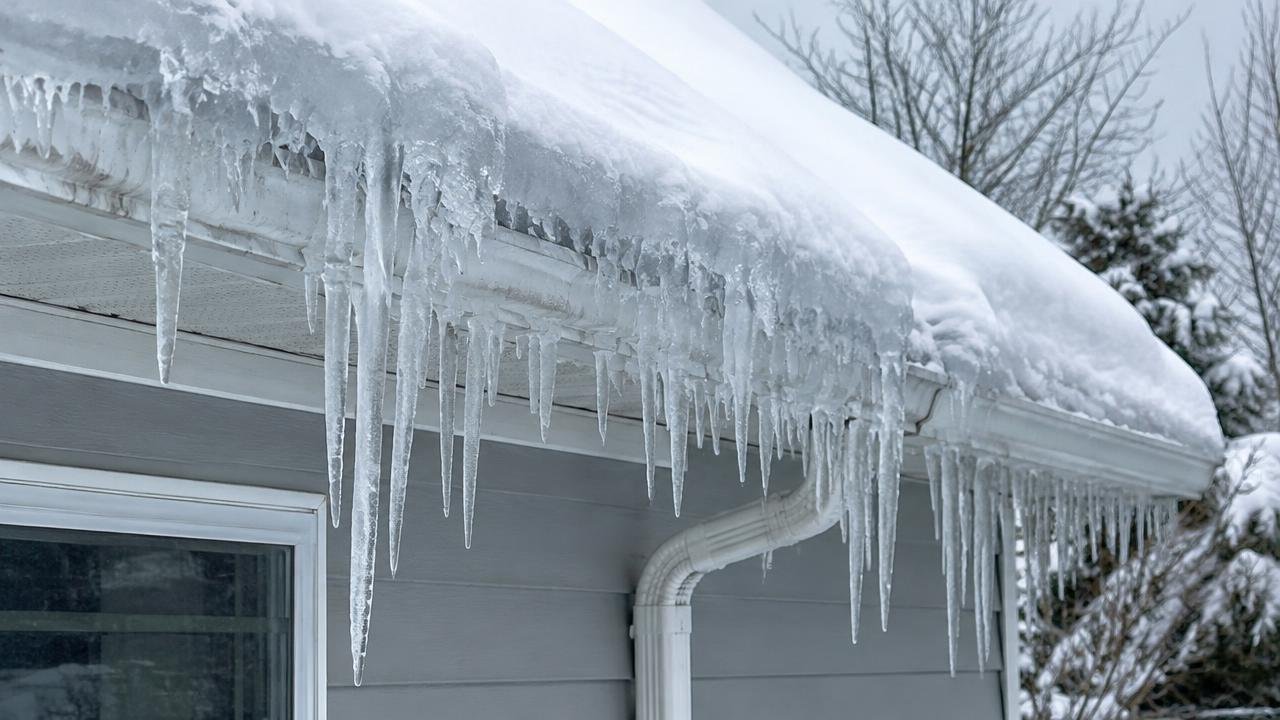
Every winter across Central Indiana, homeowners wake up to find thick ridges of solid ice hanging along their eaves and gutters. While shimmering icicles might look picturesque from the curb, they are often a warning sign of an aggressive winter roofing problem: ice dams. When snow accumulates on your shingles and begins to melt unevenly, water trickles toward the colder overhangs of your roofline, refreezing into a dense barrier that blocks further drainage.
Once an ice dam takes hold, trapped meltwater has nowhere to run. It pools behind the frozen wall, creeps under shingles, rots wooden decking, saturates attic insulation, and eventually leaks into interior ceilings and drywall. Preventing ice dams requires understanding the physics of heat loss and airflow within your attic space, rather than relying on quick fixes when the temperature plunges.
In this comprehensive guide, we will break down the true root causes of ice damming in Indiana, outline long-term structural solutions like air sealing and ventilation, and provide safe tactics to handle an active dam before it causes catastrophic moisture damage.
What Exactly Causes Ice Dams on Central Indiana Homes?
An ice dam does not form simply because it is cold outside; it forms because different sections of your roof deck are resting at drastically different temperatures. For an ice dam to develop, there must be snow cover on the roof, outdoor temperatures hovering below freezing, and warm air escaping from your living quarters into the attic space.
When warm air leaks into the attic, it warms the underside of the upper roof decking above 32 degrees Fahrenheit. As the snow resting on that warm upper roof section melts, liquid water runs down toward the eaves. Because the eaves overhang the exterior walls of the house, they do not receive escaping indoor heat and remain at ambient outdoor freezing temperatures. When the runoff reaches these sub-freezing eaves, it rapidly solidifies into ice.
Over several days of snow and freeze-thaw cycles, this frozen shelf grows taller. The growing ice barrier catches newly melting snow, creating a standing pool of water that easily exploits horizontal shingle overlaps and nail penetrations.
- Indoor heat bypasses leaking into the attic through ceiling fixtures and access hatches.
- Insufficient or unevenly distributed attic floor insulation that lets heat radiate into the rafters.
- Inadequate or blocked intake and exhaust ventilation that traps warm air under the roof deck.
- Heavy snowfall followed by sustained temperatures in the teens and twenties.
The Hidden Structural and Interior Damage Caused by Ice Dams
Many homeowners assume an ice dam is merely a gutter issue, but the real hazard happens inches above the gutter line. Conventional asphalt shingles are designed to shed gravity-driven runoff, not to withstand standing water under hydrostatic pressure. When pooled water backs up beneath the shingles, it saturates the underlayment and seeps into the wooden roof sheathing.
Over time, repeated ice damming causes plywood delamination, mold growth in the attic framing, and rusted roofing fasteners. If the water penetrates the ceiling plane, you may notice discolored drywall, peeling paint, ruined hardwood floors, and electrical shorts in overhead light fixtures.
Furthermore, soaked attic insulation loses almost all of its thermal resistance (R-value). Wet fiberglass or cellulose matting compresses, allowing even more household heat to escape into the attic and accelerating the very freeze-thaw cycle that created the dam in the first place.
Sealing Attic Air Leaks: The True First Line of Defense
The single most effective long-term way to prevent ice dams is to keep your attic floor completely airtight. Most people assume their attic insulation stops heat transfer, but standard fiberglass batts allow warm air to pass straight through them if air gaps exist beneath the insulation layer.
Warm, buoyant indoor air finds paths of least resistance through ceiling penetrations known as attic bypasses. Identifying and closing these bypasses stops the thermal plume that warms your upper roof deck.
- Caulking around recessed ceiling lights, bathroom exhaust fan housings, and ceiling electrical junction boxes.
- Expanding foam around plumbing vent stacks, electrical conduits, and chimney chase openings.
- Weatherstripping and insulating pull-down attic stairs, drop-down scuttle hatches, and knee-wall doors.
- Ensuring kitchen and bathroom exhaust ducts vent directly outside through roof caps, rather than discharging moist, heated air into the attic.
The Critical Role of Proper Roof and Attic Ventilation
Air sealing stops direct air leaks, but natural heat conduction through building materials will still warm the attic space over time. To maintain a uniform, cold roof deck, your home needs balanced roof ventilation that constantly draws in cold outdoor air at the eaves and expels stale attic air at the ridge.
When soffit intake vents are functioning correctly, cold outside air enters low and sweeps upward along the underside of the roof sheathing. It carries away residual radiant heat before exiting through ridge or box vents. If you want to understand the mechanics of balanced airflow in depth, read our guide on why attic ventilation is important for maintaining year-round roof integrity.
During many winter attic assessments, contractors discover that soffit vents are completely smothered by blown-in insulation. Installing plastic or foam attic baffles (rafting vents) along the exterior top plate ensures that insulation cannot collapse over the soffit perforations, keeping the intake channel unobstructed year-round.
Roofing Upgrades: Ice and Water Shield and Gutters
While insulation and airflow resolve the thermal causes of ice dams, your roofing system must have physical defensive barriers designed to protect vulnerable roof edges. During a roof overhaul or replacement, building codes across Central Indiana require self-adhering waterproof underlayment (commonly known as ice and water shield).
Ice and water shield is a thick, rubberized asphalt membrane installed directly onto the bare wood deck. It should extend from the eave edge up the slope to a point at least 24 inches inside the interior heated wall plane. When roofing nails puncture this membrane, the rubberized compound seals tightly around the fastener shank, preventing backed-up pool water from penetrating the decking even if an ice dam forms.
Your drainage system also plays a supporting role. While clogged gutters do not create ice dams, gutters packed with leaves and debris hold trapped water that freezes into heavy blocks, aggravating weight stress and blocking melted runoff. Investing in durable seamless gutters and keeping downspouts clear allows water to drain freely during winter thaws. If your roof deck has suffered chronic moisture rot from past dams, you may also want to explore whether replacing a roof in winter is a viable path forward.
- Install ice and water shield in all valleys, around skylights, and along all exterior eaves.
- Ensure metal drip edge is installed properly at both eaves and rakes to direct runoff cleanly into gutters.
- Keep gutters and downspout cleanouts cleared of autumn leaves before the first hard freeze hits.
Immediate Steps: What to Do If You Already Have an Ice Dam
If you already have a thick ice ridge forming on your eaves, aggressive prevention is no longer an option—you need safe mitigation. Never take a metal shovel, hatchet, or hammer to your shingles; striking frozen asphalt shingles will crack the fiberglass mat, shatter the granules, and cause immediate leaks that require urgent professional roof repair.
Homeowners can carefully use an extendable roof rake from the ground to pull fresh snow off the lower three to four feet of the roof slope. Removing the snow blanket cuts off the water supply feeding the ice dam. However, always stand firmly on the ground—never climb onto an icy roof, and stay clear of overhead power lines.
If water has already entered your home, emergency leak detection services can identify where the backing water is breaching your building envelope and install temporary diversions or commercial steam equipment to melt channels through the dam without harming the shingles.
- Use a telescoping roof rake from ground level to pull loose snow off the eaves after heavy snowfalls.
- Fill a nylon stocking with calcium chloride (never rock salt) and lay it vertically across the dam to melt a drainage channel.
- Place box fans in your attic aimed directly at leaking roof sheathing spots to freeze the water temporarily until exterior repairs occur.
- Never use blowtorches, open flames, or pickaxes on your roof surface.
Schedule Your Winter Roofing Assessment with Central Indy Roofing
Ice dams are among the most destructive winter threats facing Central Indiana homes and commercial buildings. Rather than waiting for water stains to bloom across your ceilings during the next major cold snap, taking proactive steps with insulation, ventilation, and waterproof underlayment protects your equity for decades to come.
The experienced technicians at Central Indy Roofing know how to diagnose the underlying ventilation imbalances and structural air leaks that lead to severe winter ice dams. Contact our local team today at 317-836-2455 to schedule your free roof inspection and detailed estimate.
Frequently Asked Questions
- Can clean gutters prevent ice dams from forming?
- No. Clean gutters ensure that melted water drains freely once it reaches the roofline, but they do not stop ice dams. Ice dams are caused by uneven attic temperatures melting snow on the upper roof, which refreezes at the colder eaves above the gutter line. However, clogged gutters filled with frozen debris worsen the weight load and can exacerbate water pooling.
- Is it safe to use rock salt to melt ice dams on shingles?
- You should never use standard rock salt (sodium chloride) on your roof. Rock salt is corrosive to metal gutters, nails, and flashing, and the resulting salty runoff can kill foundation shrubs and discolour exterior siding. If you need a temporary melt channel, use calcium chloride pellets enclosed in a permeable fabric stocking.
- Does homeowners insurance cover damage from ice dams?
- Most standard homeowners insurance policies cover sudden, accidental interior water damage caused by ice dams (such as ruined drywall, insulation, and flooring). However, insurance policies typically do not cover the cost of removing the ice dam itself or repairing long-standing roof wear caused by deferred maintenance.
- How much ice and water shield is required by Indiana building codes?
- In regions subject to freezing and ice damming like Central Indiana, building codes require waterproof membrane to extend from the lowest roof edge to a point at least 24 inches inward from the exterior heated wall plane of the building.