
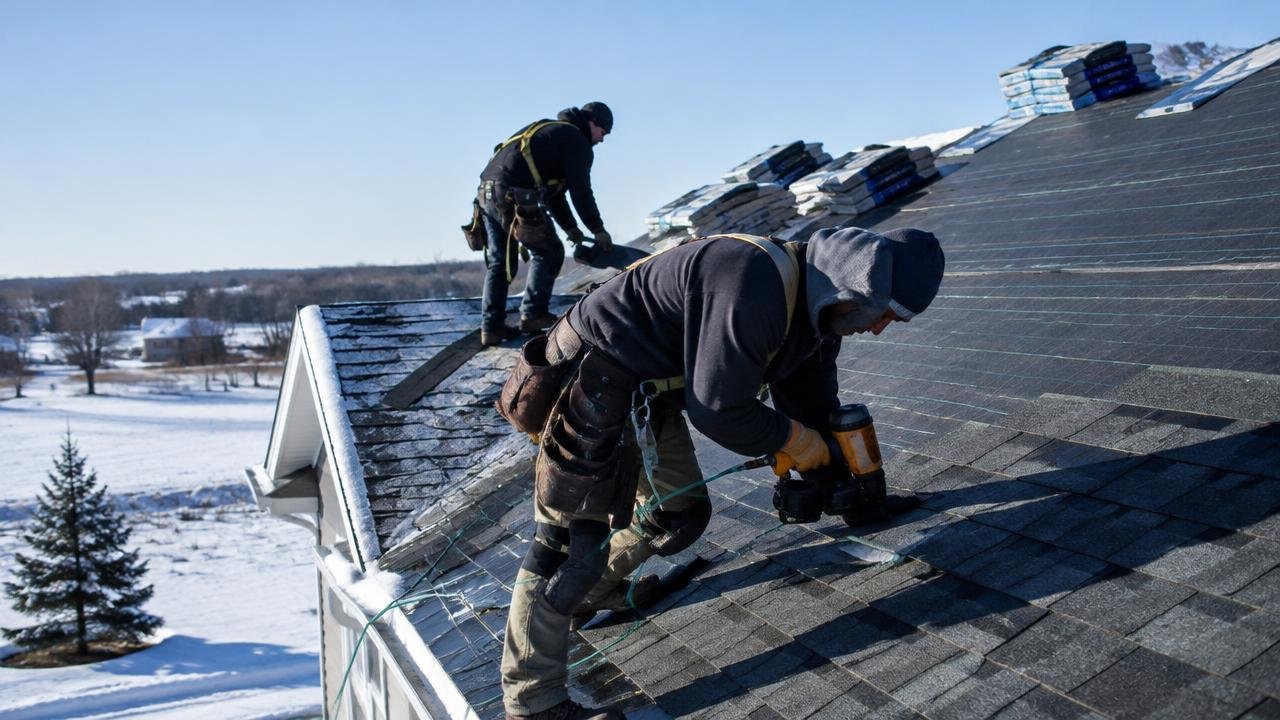
When severe winter storms strike Central Indiana, heavy snowfall, ice accumulation, and freezing winds can push an aging or compromised roof past its breaking point. If you discover a sudden leak, sagging decking, or missing shingles in the middle of January, your first thought is likely anxiety: can you replace a roof in winter in Indiana, or are you forced to live with temporary patches until spring?
The short answer is yes, you can replace a roof during an Indiana winter. Professional roofing contractors work throughout the cold months to restore storm-damaged and failing residential and commercial properties. Modern roofing materials and cold-weather installation techniques allow crews to perform installations safely and effectively, even when temperatures plunge.
However, winter roofing presents unique logistical and material challenges that do not exist during the warmer summer and fall seasons. Shingles react differently to freezing temperatures, sealants require specific handling, and ice on roof slopes introduces distinct safety hazards. Understanding how cold-weather roof replacement works helps Central Indiana property owners make informed decisions when roofing emergencies arise in winter.
The Realities of Indiana Winter Weather on Roofing
Indiana winters are notorious for their unpredictability. A single week can cycle between freezing rain, heavy lake-effect snow flurries, sub-zero wind chills, and brief forty-degree thaws. These fluctuating conditions impact both the building materials and the technicians performing the physical work on your home or commercial building.
While routine or cosmetic replacements are frequently scheduled between April and November, emergency situations do not wait for ideal weather. If your roof suffers severe storm damage or sudden structural failure, waiting months for warm temperatures can lead to catastrophic interior water damage, ruined insulation, and toxic mold growth. In those situations, scheduling a full roof replacement in winter is far better than risking thousands of dollars in secondary structural losses.
Experienced local roofers monitor forecasts closely during winter. Projects are scheduled around dry weather windows, avoiding active snowfall, high winds, and periods of sleet or freezing rain that make working at heights dangerous.
How Cold Temperatures Affect Asphalt Shingles
The primary challenge with winter installations involves the asphalt shingles themselves. Asphalt becomes significantly stiffer and more brittle when ambient temperatures dip below 40 degrees Fahrenheit. If handled roughly, cold shingles can crack or split during transit, cutting, and fastening.
To combat this vulnerability, skilled contractors take specific precautions. Shingle bundles are often stored in temperature-controlled spaces or heated trailers right up until installation. When working on asphalt shingle roofing, installers handle bundles carefully and adjust nail gun pressure settings. If pneumatic nail guns deliver too much air pressure in freezing weather, the fasteners can punch directly through the brittle shingle mat rather than seating flush against the reinforcement strip.
Another critical factor is the thermal sealant strip on the underside of each shingle. Under normal spring and summer conditions, the sun's ambient heat activates this adhesive strip, bonding the overlapping shingles together into an impermeable, wind-resistant barrier. In winter, natural solar bonding takes longer, which requires dedicated cold-weather techniques.
- Thermal sealant strips remain dormant until sufficient direct sunlight or warmer ambient air activates the adhesive.
- Hand-sealing with approved asphalt roofing cement may be required along eaves, rakes, and high-exposure planes to prevent winter wind uplift.
- Pneumatic nailers require regular calibration and moisture-free airline checks to prevent freezing valves and over-driven fasteners.
- Shingles must be cut with sharp utility blades to prevent jagged edges or fractured fiberglass mats.
Managing Underlayment, Ice Barriers, and Flashing in Freezing Conditions
A durable roofing system relies on multiple layers beyond the visible shingles. Ice and water protector membranes, synthetic underlayment, and metal flashing all serve vital protective roles, and each behaves differently when the temperature drops.
Self-adhering ice and water protector membranes are critical along eaves, valleys, and around roof penetrations to prevent leaks caused by winter freeze-thaw cycles. In freezing temperatures, the adhesive backing on standard peel-and-stick membranes may not adhere aggressively to cold plywood or OSB roof decking. Contractors often use specialized low-temperature formulations or prime the wooden substrate to guarantee a tight, watertight bond.
Proper integration of metal flashing is also essential during cold installations. Installing clean flashing repair or new valley metal around chimneys, sidewalls, and vents requires careful bending and sealing, as cold caulk and sealants can become stiff and difficult to tool smoothly unless kept warm prior to application.
Winter Safety and Jobsite Protection
Safety is paramount during any roofing project, but winter conditions amplify the risks. Frost, black ice, and hidden snow patches turn a pitched roof surface into an extreme slip hazard. Professional roofing crews implement rigorous safety protocols when working in winter.
Before any tear-off or installation begins, the crew removes accumulated snow and inspects the deck for frost or thin sheets of ice. Workers use secure fall-arrest harnesses, specialized winter traction footwear, and anchored safety lines throughout the process. On commercial structures, such as apartment roofing or low-slope properties, flat deck surfaces must also be carefully cleared of snow loads to ensure clear footing and safe material staging.
Additionally, winter tear-offs must be executed in manageable sections. Rather than stripping an entire roof deck at once, crews remove old materials incrementally and dry-in the exposed deck with synthetic underlayment on the same day. This practice ensures that sudden snow squalls or winter showers cannot penetrate an unprotected attic.
Winter Roof Replacement vs. Temporary Winter Repairs
Homeowners faced with a mid-winter roofing dilemma often wonder whether they should invest in a full replacement immediately or opt for a temporary repair to get through until spring. The right path depends on the age of your system and the extent of the damage.
If your roof is relatively young and suffered localized wind damage to a few shingles, a targeted roof repair is frequently the most practical, cost-effective solution. Similarly, if ice accumulation has caused moisture intrusion, learning how to prevent ice dams and addressing attic insulation may resolve the immediate emergency without replacing the entire roof.
Conversely, if the roof has reached the end of its useful lifespan, exhibits widespread deck rot, or suffered severe structural crushing from a fallen limb during a winter storm, patching will only delay the inevitable while risking interior ceilings and drywall. In these scenarios, a full replacement is the safest, most economical investment for the property.
- Choose repair when damage is confined to a small section and the surrounding shingles remain flexible and structurally sound.
- Choose replacement when shingles are shedding granules universally, multiple active leaks appear, or the decking has softened.
- Consider seasonal scheduling flexibility; roofing contractors often have shorter waitlists during winter months compared to peak autumn demand.
Ensuring Proper Attic Ventilation During Cold-Weather Work
A critical yet frequently overlooked component of a winter roof replacement is attic ventilation. In winter, warm, humid indoor air rises into the attic space from living areas below. If that moisture cannot escape through balanced intake and exhaust vents, it condenses against the cold underside of the roof decking, encouraging wood rot, mold, and premature shingle deterioration.
A proper winter installation evaluates the complete roofing envelope, including soffit baffles, ridge vents, and intake capacity. Homeowners who review why is attic ventilation important quickly realize that good airflow protects roof shingles year-round while reducing the temperature differential that causes destructive ice dam formation on the eaves.
If you suspect winter storm damage or are experiencing active roof leaks, do not wait for warm weather while water threatens your home. Contact the experienced team at Central Indy Roofing for an honest assessment. Schedule your free roof inspection today or call 317-836-2455 to discuss your winter roofing options with our local specialists.
Frequently Asked Questions
- Will shingles seal properly if installed during freezing temperatures?
- Yes, but the sealing process takes longer in cold weather. Modern asphalt shingles use thermal adhesive strips that activate with heat and sunlight. In winter, professional roofers often hand-seal shingles with manufacturer-approved roofing cement or rely on sunny winter days to initiate the bond, ensuring shingles stay secure until consistent spring warmth permanently sets the adhesive.
- Is it more expensive to replace a roof in the winter?
- Winter roof replacements generally carry comparable material and labor costs to warm-weather projects, though additional labor may occasionally be required for snow removal, hand-sealing shingles, or cold-weather adhesive preparation. However, because winter is often a slower season for contractors, scheduling availability is typically faster.
- What temperature is considered too cold for roofing in Indiana?
- Most shingle manufacturers recommend extra caution when installing below 40 degrees Fahrenheit. While work can be performed in colder conditions by warming shingles, using hand-tabbing adhesives, and calibrating nail guns, roofing typically pauses during active snow, freezing rain, or sub-zero wind chills for safety reasons.
- Can commercial flat roofs be replaced in winter?
- Certain commercial flat roofing systems can be installed in cold weather, particularly mechanically attached single-ply membranes like TPO or PVC. However, water-based adhesives and certain chemical bonding agents used in fully adhered systems require minimum temperatures to cure properly, requiring specialized cold-weather adhesives.