Indiana roofs face seasonal temperature swings, rain, wind, occasional hail, snow, and freeze-thaw cycles. No single roofing material is best for every home or commercial building. The right choice depends on roof slope and structure, budget, appearance, maintenance expectations, local requirements, installation quality, and the exact product system. A material’s performance claims also depend on correct installation and compatible components.
Compare complete systems rather than judging a roof covering in isolation. Underlayment, flashing, ventilation, drainage, and workmanship contribute to performance. The sections below outline common choices and practical tradeoffs, not a one-size-fits-all recommendation. Start by arranging a roof inspection to assess your existing roof and explore roof replacement options.
1. Asphalt shingles: common, versatile, and varied
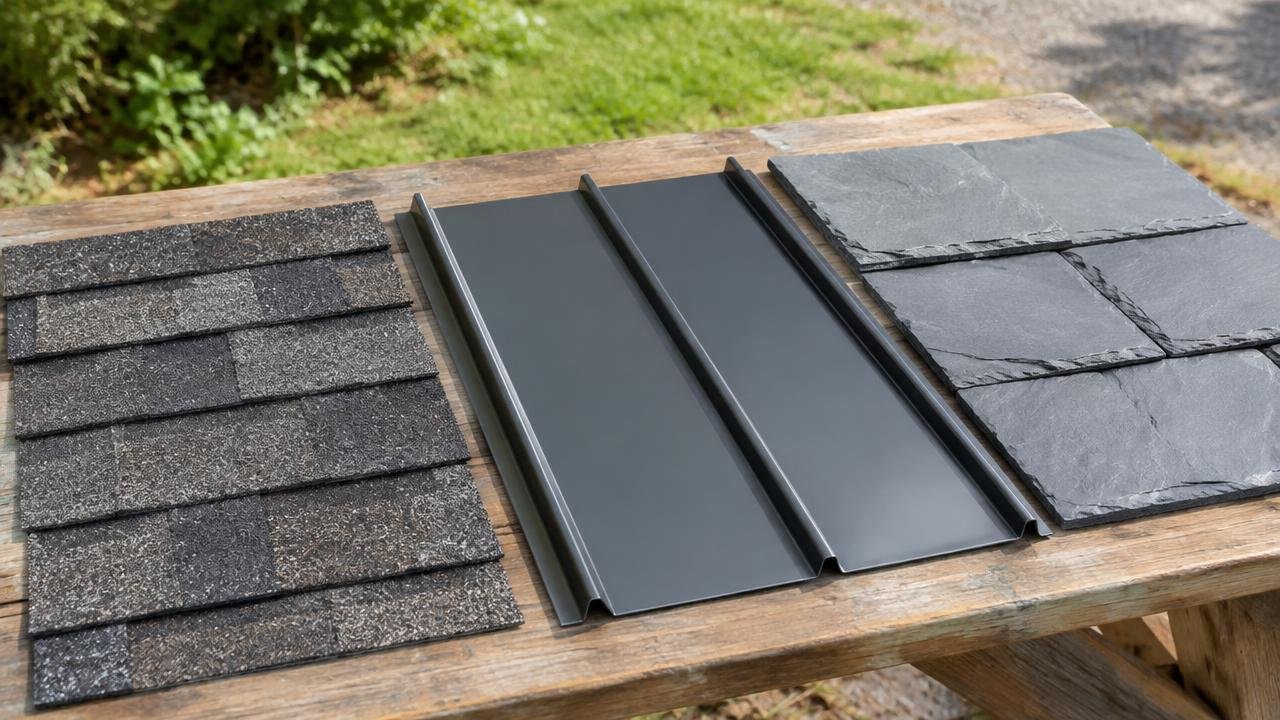
Asphalt shingles are widely used on sloped residential roofs and are available in many colors, profiles, and price levels. Three-tab shingles have a flatter, uniform appearance, while architectural shingles are thicker and more dimensional. Product lines vary in wind and impact ratings, installation requirements, and warranty terms. A homeowner should compare the specific product data and system requirements rather than assuming every shingle performs the same way.
Shingles can be practical to repair in many situations, but compatibility, roof age, fading, and availability of matching products matter. Proper fastening, starter strips, ridge details, underlayment, and ventilation influence results. Ask whether the proposed system is appropriate for your roof slope and local conditions. Central Indy Roofing installs asphalt shingle roofing; compare architectural and 3-tab shingles before deciding.
2. Metal roofing: consider the system and building
Metal roofing includes different panel profiles, seam designs, coatings, and substrates. Some systems are designed for residential slopes and others for commercial applications. Metal can shed water effectively when correctly detailed, and it is available in varied appearances. However, performance depends on panel design, fastening or seam method, underlayment, roof geometry, and quality of installation. The word “metal” alone does not describe a complete specification or predict how a particular roof will perform.
Compare initial cost, expected maintenance, noise considerations, snow and ice behavior, expansion details, and repair needs. Ask how penetrations, eaves, valleys, and transitions will be handled and whether the system suits the existing structure. Metal is not automatically immune to hail dents or wind damage. Obtain written product information and confirm that the installer is experienced with the exact system being proposed.
3. Tile, slate, and other specialty materials
Clay or concrete tile and natural slate can offer distinctive appearance and long service potential when the building is designed to support them and the system is properly installed. Their weight, cost, structural requirements, and specialized repair needs make them unsuitable for some homes. The supporting deck and framing must be evaluated, and local availability of experienced installers can matter for both installation and future maintenance.
Specialty materials also require careful attention to flashing and underlayment. Some products may be brittle under foot traffic, and replacement pieces may be difficult to match. Ask for a structural evaluation where needed and understand how broken pieces will be repaired. Product life claims are not guarantees for a specific property; climate exposure, installation, maintenance, and workmanship affect actual performance.
4. Flat and low-slope roofing for additions and businesses
Low-slope roofs commonly use membranes or multi-layer systems rather than steep-slope shingles. Options may include TPO, EPDM, modified bitumen, and other assemblies, each with different seams, attachment methods, surface properties, and maintenance needs. The right system depends on drainage, rooftop equipment, foot traffic, insulation needs, building use, and the existing assembly. Standing water or poor drainage can shorten service life regardless of the membrane selected.
For a commercial property, discuss how installation affects occupants, equipment, and operations. Ask about seam details, penetrations, edge securement, drainage plans, insulation, and inspection access. A system proposal should specify components rather than merely naming a membrane. Explore commercial roofing and commercial property roofing for building-specific considerations.
5. Weather resilience is about details as well as material
Wind resistance depends on the product rating, fastening pattern, roof geometry, edge details, installation quality, and exposure. Hail performance likewise varies by product and does not mean damage is impossible. Snow and ice make insulation, air sealing, ventilation, and drainage important; a roof covering alone cannot prevent every ice dam. Rain management relies on properly layered flashing, valleys, and gutters, not just the main surface material.
Ask the contractor to explain how the entire assembly addresses the conditions on your building. For example, balanced attic ventilation and adequate insulation are separate but related components of a roof system. A good material selection should account for existing ventilation, roof deck condition, and any known moisture issues. Consider impact-rated products if hail resilience is a priority, while reviewing what testing and ratings mean for the specific shingle.
- Check product documentation and required installation methods.
- Evaluate wind, hail, drainage, and snow concerns as distinct issues.
- Include flashing, underlayment, ventilation, and edge details in the proposal.
- Compare maintenance and repairability alongside upfront cost and appearance.
6. How to choose for your property
Begin with the building: roof slope, structural capacity, drainage, existing layers, attic conditions, penetrations, and local rules. Then consider budget, desired appearance, anticipated ownership horizon, and maintenance capacity. Request itemized bids that identify the exact products, removal and disposal, underlayment, flashing, ventilation, ventilation changes if applicable, and cleanup. Compare proposals based on equivalent scopes, not bottom-line price alone. Ask what conditions could change the estimate once the old roof is removed.
Verify contractor identity, insurance, references, written terms, payment schedule, and how changes are approved. Ask who obtains any required permits and how workmanship concerns are handled. A knowledgeable professional should discuss tradeoffs, not claim that one material is perfect or indestructible. Central Indy Roofing can assess options for your property and provide a free roof inspection; call 317-836-2455 to arrange a conversation.
Frequently Asked Questions
- Are asphalt shingles suitable for Indiana?
- Many Indiana homes use asphalt shingles, but suitability depends on the specific product, roof design, installation, and maintenance. Compare product documentation and the complete roof system.
- Is metal roofing always better in storms?
- No material is immune to storm damage. Metal performance varies by panel and installation system, and hail can dent some products. Review ratings, details, and repair expectations for the proposed system.
- Does a more expensive roof always last longer?
- Not necessarily. Product quality, correct installation, ventilation, drainage, maintenance, and exposure all affect service life. Compare documented specifications and workmanship rather than price alone.
- What is best for a flat roof?
- The best low-slope system depends on building use, drainage, rooftop equipment, insulation, budget, and existing construction. A site-specific assessment is needed to compare options.