
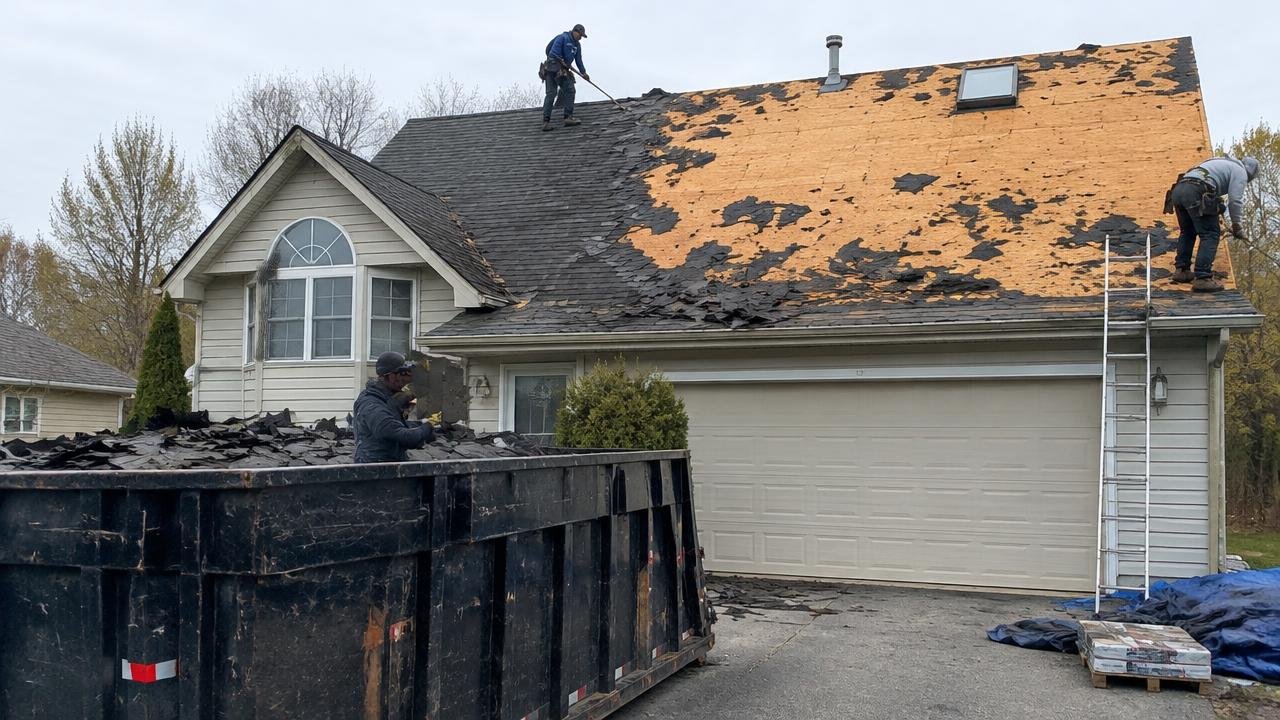
Many homeowners ask how long they will have roofing crews, noise, and material deliveries around their home. A straightforward residential shingle replacement may be completed in a day or a few working days, but there is no universal timeline. Roof size, pitch, layers, decking condition, access, weather, material choice, and local permitting needs can all change the schedule. A contractor should give a project-specific estimate and explain what could extend it.
The on-site installation is only part of the overall process. Scheduling, material delivery, inspection, repairs to discovered damage, and cleanup also matter. Commercial systems can take longer because building size, operations, safety planning, and system details differ. This guide describes typical stages without promising a fixed duration. Begin with a professional roof inspection and learn about roof replacement.
1. What a typical residential replacement schedule includes
For a relatively simple, accessible asphalt-shingle roof with suitable weather and no major concealed damage, removal and installation may take roughly one to several working days. That broad range is only a planning guide, not a guarantee. A larger roof, multiple roof planes, steep slopes, complex valleys, skylights, chimneys, or more than one existing layer can require additional labor and staging. The contractor should explain whether the quoted timeline describes active work days, calendar days, or the interval from signing to completion.
The job generally includes protecting landscaping, delivering materials, removing existing roofing, evaluating the exposed deck, installing underlayment and flashing details, applying the selected roof covering, and cleaning the site. A crew may work in stages to keep the home protected overnight. Ask what happens if the work cannot be completed in one day and how the exposed area will be secured. Learn about asphalt shingle roofing if that is the proposed system.
2. Roof size, pitch, and architectural complexity
Roof area influences material quantities and labor, but square footage alone does not determine the schedule. A steep roof can require specialized access and slower, more cautious work. Numerous ridges, hips, valleys, dormers, and transitions involve more detailed cutting and installation than a simple roof plane. Chimneys, skylights, plumbing vents, and wall intersections also require careful flashing. Access around landscaping, fences, neighboring buildings, and narrow driveways can affect where equipment and materials can be staged.
A contractor’s site visit should account for these conditions, rather than relying only on an online measurement. Ask how the crew will protect the property, where the dumpster or trailer will sit, and whether access restrictions need to be resolved before work begins. If an older home has unusual roof geometry or previous repairs, allow time for careful evaluation. The more clearly these factors are discussed in advance, the fewer surprises there are likely to be once the old roof is removed.
- Roof size and number of roof planes.
- Pitch, height, and safe access requirements.
- Valleys, dormers, skylights, chimneys, and wall transitions.
- Staging space, driveway access, and protection needs.
3. Tear-off, hidden damage, and decking repairs
Removing old roofing often reveals conditions that could not be confirmed from the surface. Decking may be soft, delaminated, or otherwise unsuitable for new materials. Damaged fascia, underlayment, ventilation components, or flashing may also need attention. The contractor should explain in the contract how concealed damage will be documented, how added work is priced, and whether you will be contacted before repairs beyond an agreed allowance proceed.
This discovery stage can add time because the crew must stop, document the issue, discuss options, and obtain materials or authorization. That pause is generally preferable to covering unsound components. Ask for photographs of affected areas and an itemized change order before additional work when feasible. A replacement can also include upgrades or corrections that need coordination, such as roof ventilation improvements or new flashing.
4. Weather and Central Indiana seasonal conditions
Roofing work depends on safe weather. Rain can expose the building to water entry during removal, while strong winds can make handling materials and operating equipment unsafe. Snow, ice, and very cold conditions may affect access, adhesion, and installation requirements for some materials. Heat can also affect working conditions and product handling. A responsible contractor may delay work rather than compromise safety or manufacturer instructions.
Ask how weather delays are communicated and what temporary protection is used if a project is interrupted. A schedule should include realistic flexibility rather than assuming every forecast will cooperate. In Central Indiana, conditions can change quickly across seasons; the best installation window depends on the roof system and actual conditions, not simply the month. Discuss a backup date and keep driveways or access paths clear when the crew is expected.
5. Materials, permits, and project preparation
Material availability and delivery timing can affect the start date. Specialty colors, custom metal details, or nonstandard roofing systems may require additional lead time. Permit requirements vary by locality and project scope, so ask who confirms applicable rules and obtains necessary approvals. If your home is part of a homeowners association or has design restrictions, resolve those before ordering materials. For commercial buildings, occupant safety, roof access, and coordination with tenants or business hours can make planning especially important.
Before installation, discuss how to prepare the property. Move vehicles, secure fragile wall decorations if advised, protect items in the attic, and identify sensitive landscaping or outdoor equipment. Confirm where crews may access the property, how pets will be kept safely indoors, and who will answer questions on site. Ask whether the contractor handles old material disposal and what cleanup is included. A clearly defined plan prevents avoidable interruptions and helps the crew work efficiently.
6. Cleanup, final review, and when work is complete
Cleanup is part of the roofing project, not an afterthought. Crews typically remove debris, collect loose materials, and use ground-level procedures to retrieve nails, but homeowners should still check outdoor areas cautiously after work. Ask what final walkthrough is included and how the contractor verifies that roof edges, penetrations, and flashing details are complete. Photos of finished work can be useful when not every roof area is visible from the ground.
Clarify whether the project is considered complete after installation, cleanup, municipal inspection, or delivery of final documents. Keep the contract, change orders, invoices, product information, and any warranty paperwork. For an accurate timeline, a contractor needs to see the property and understand your goals. Central Indy Roofing provides free estimates; arrange a free roof inspection or call 317-836-2455 to discuss your project.
Frequently Asked Questions
- Can a roof be replaced in one day?
- Some straightforward residential projects may be completed in one working day, but size, pitch, complexity, weather, crew availability, and hidden repairs can extend the schedule. Ask for a project-specific estimate.
- Can I stay in my home during roof replacement?
- Usually occupants can remain inside, though roofing is noisy and work may affect access or parking. Discuss safety precautions, pets, fragile belongings, and any special needs with the contractor in advance.
- What happens if it rains during the project?
- Crews plan to protect exposed areas and may pause work when conditions are unsafe or unsuitable. Ask the contractor how the roof will be secured and how weather delays affect the schedule.
- Does replacing a commercial roof take longer?
- It can. Building size, roof system, occupancy, equipment, safety planning, and phasing all matter. A site assessment and detailed work plan are needed to estimate duration.